
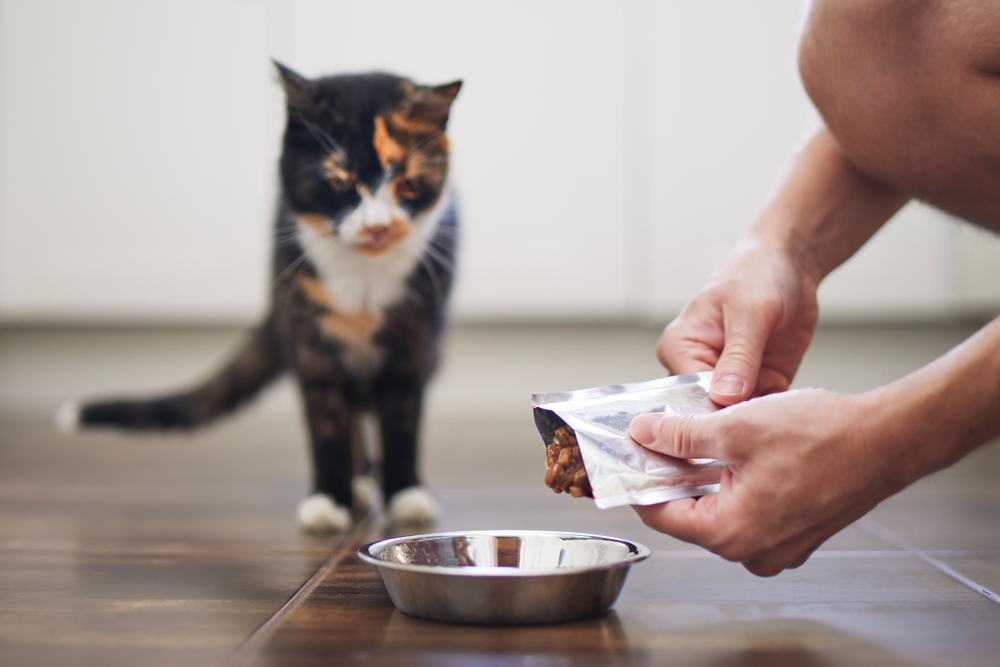
How Many Calories Does Your Pet Really Need?
The feeding guide on the back of a pet food bag is a reasonable starting point, but it was written for the average dog or cat, and there is no such thing as an average dog or cat. Activity level, neuter status, age, breed, body condition, and even the time of year all affect how many calories a pet actually needs day to day. Calorie calculators offer a more personalised approach, using body weight and life stage to estimate daily energy requirements, though even these figures need to be adjusted based on how an individual animal responds over time. The goal isn’t a perfect number; it’s an informed starting point paired with regular reassessment.
The Vale Veterinary Group serves pets and their families across Devon, and we are committed to practical, evidence-based guidance on all aspects of pet health, including nutrition. If your pet is gaining weight despite what seems like a sensible feeding plan, or losing condition despite eating regularly, we are here to help work through what might need to change. Get in touch if something about your pet’s weight or condition doesn’t seem quite right.
Why Are So Many Pets Overweight, Even With a Set Feeding Routine?
It’s one of the more common conversations in veterinary practice: a household doing everything right by their own account, but whose dog or cat has quietly crept up in weight year by year. The portions look sensible. The food seems decent. And yet.
Estimates suggest that more than half of dogs and cats in the UK are overweight or obese, and the cause is rarely dramatic overfeeding. It is almost always a modest daily surplus, perhaps 10 to 20% more calories than the pet is actually burning, compounded by treats that don’t get counted and perhaps a second member of the household who also gives treats without realising the first has already done so.
Weight gain in pets is a slow process, and that makes it easy to miss until it’s significant. A routine healthcare visit is often where you first hear that your pet is carrying more weight than is ideal, and the response is usually surprise rather than denial. Most people genuinely don’t know the numbers are off.
Portion control and calorie awareness are the foundations of a healthy weight. Getting them right doesn’t require obsessive measuring, but it does require understanding what your pet actually needs, rather than what the bag recommends for an average animal that may bear little resemblance to yours.
Why Calories Matter More Than They Seem To
Pet food contains more energy than it looks. Dry kibble especially tends to be calorie-dense, meaning a cup that looks like a modest amount can represent a substantial portion of a pet’s daily energy budget. Add a few treats and a shared biscuit at teatime, and it’s easy to see how the daily total climbs without anyone noticing.
Understanding how much to feed requires more than a glance at the bag, because bags are written for adult pets of a given weight range, with no adjustment for activity level, health status, or individual metabolism. A neutered, indoor, middle-aged cat may need as little as 60 to 70% of what the label suggests. An older cat with hyperthyroidism or a young cat who treats your home like their personal jungle gym may need more.
Calories alone also don’t capture the full nutritional picture. The composition of what a pet eats matters alongside the quantity:
- Protein supports lean muscle mass and helps pets feel satiated
- Healthy fats at appropriate levels support skin, coat, and cellular function
- Dietary fibre slows digestion and helps pets feel full between meals without adding significant calories
An ideal feeding plan accounts for all of these factors together. That is why veterinary input is genuinely useful, not as a formality, but because the numbers genuinely vary between individual animals.
What About Prescription Weight Loss Diets For Pets?
For pets who are significantly overweight or have health conditions complicating weight loss, prescription weight-loss diets are worth discussing with us. These are formulated to support safe fat loss while preserving muscle, using higher protein-to-calorie ratios and controlled fibre levels that help pets feel satisfied on fewer calories.
Why Do I Need to Be Careful When Cutting My Cat’s Calories?
Weight loss for cats carries a specific caution worth emphasising: cats must never lose weight too quickly. When a cat is in calorie deficit too rapidly, the liver mobilises fat stores faster than it can process them, leading to hepatic lipidosis, a potentially serious liver condition. Gradual, guided weight loss is always the goal for cats, not a crash restriction.
How to Assess Your Pet’s Body Condition at Home
The number on the scales tells only part of the story. Two dogs of identical weight can have completely different body compositions: one may be carrying substantial fat while the other is lean and well-muscled. Weight alone doesn’t capture this, which is why Body Condition Scoring (BCS) is used alongside weight to give a fuller picture.
Muscle is denser than fat, which means a lean, active pet may weigh more than a sedentary pet of similar size while being considerably healthier. The BCS assesses fat distribution and muscle coverage rather than weight in isolation.
You can check your pet’s body condition at home using three simple observations:
- From above: There should be a visible waist narrowing behind the ribcage. A pet with no discernible waist from this angle is likely carrying excess weight.
- From the side: The abdomen should tuck upward towards the hips. A belly that hangs level with or below the chest suggests fat accumulation.
- By feel: Run your hands along the ribcage with light pressure, as though you’re feeling through a light jacket. Each rib should be easily palpable. If you have to press firmly to find them, or can’t feel them at all, there’s likely excess fat coverage.
The body condition scoring system runs from 1 to 9:
| Score | Category | What You’ll Notice |
| 1–3 | Underweight | Ribs, spine, and hips visible; no fat; obvious tuck |
| 4–5 | Ideal | Ribs easy to feel with light pressure; clear waist; gentle tuck |
| 6–7 | Overweight | Ribs harder to feel; waist faint or absent; fat pads developing |
| 8–9 | Obese | Ribs cannot be felt; no waist; rounded belly; obvious fat deposits |
Check monthly, and more frequently if your pet has long or thick fur that makes visual assessment harder. We can demonstrate the technique properly during a wellness visit and help you find a target BCS to work towards.
How to Use a Pet Calorie Calculator (and What It Can’t Do)
Online calorie calculators are a genuinely useful starting point. The Pet Nutrition Alliance offers a free calorie calculator that is straightforward to use and based on the same formulas used in veterinary practice. To get a useful result, you’ll need:
- Your pet’s current weight
- Their body condition score (to apply a multiplier for whether they’re at ideal, overweight, or need to lose)
- The calorie content per cup or 100g of their current food (usually on the bag or the manufacturer’s website)
The calculator will give you a daily calorie target and translate that into a feeding amount. It will also let you set aside a treat allowance so you can see how much to reduce meals to accommodate extras.
That said, a calculator is a starting point, not a finished plan. It cannot account for health conditions, adjust for a dog who spends winter indoors rather than on long walks, or evaluate whether the food itself is nutritionally balanced. Obesity prevention requires ongoing reassessment, not a single calculation that stays fixed for years.
Calorie needs shift with age, activity level, seasons, and health status. A working farm dog in Devon has very different energy requirements in January versus July. A cat who has moved from an outdoor lifestyle to a flat needs a meaningful reduction in calories. These are the adjustments we can help make as your pet’s life changes.
Hidden Calories: Where Feeding Plans Quietly Fall Apart
Even well-intentioned feeding plans unravel because of what happens between meals. Calories in treats add up faster than most people expect. To put some figures in perspective:
- Small training treat: approximately 25–35 calories each
- Large biscuit-style treat: approximately 100–120 calories
- One tablespoon of peanut butter: approximately 90–100 calories
For a 5kg dog with a daily calorie budget of around 200–250 calories, a tablespoon of peanut butter plus two or three biscuit treats represents nearly the entire day’s energy allowance in extras alone. The meals may be perfectly portioned, and the dog will still gain weight.
Common hidden calorie sources to watch for:
- Training treats given several times during a short session without counting them
- Table scraps passed over during family meals
- Dental chews that contain more calories than expected (always check the packaging)
- Multiple people in the household each giving treats independently
- Shared snacks like cheese, sliced meat, or crackers
These contributions absolutely count. Tracking them, even roughly for a week or two, is often enough to identify where the surplus is coming from.
Low-Calorie Treat Swaps That Actually Work
Pets respond to the act of receiving something from you far more than what it actually is. High-calorie treats can be replaced with much lighter options without any noticeable change in how much your pet enjoys them.
Practical low-calorie swaps:
- Baby carrot, cut into pieces: less than 1 calorie per piece
- Single blueberry: less than 1 calorie; also high in antioxidants
- Green bean half: less than 1 calorie; good for dogs who need volume
- Thin apple slice (no seeds or core): approximately 2–3 calories; remove pips
- Cooked egg white, chopped: approximately 17 calories per white; cut into small pieces for under 2 calories per treat
A handful of baby carrots cut into training-treat-sized pieces gives dozens of rewards for fewer than 10 calories in total, compared to a bag of commercial training treats.
A Simple Daily Trick for Managing Treat Totals
Each morning, measure out your pet’s entire daily food portion and place it in a visible container. Throughout the day, treats come from this container rather than being added on top of meals. At the end of the day, whatever remains goes into the food bowl.
This works well for several reasons:
- There is a clear, physical limit that everyone in the household can see
- No additional calories enter the day beyond what’s been accounted for
- Multiple family members can give treats without double-counting
- It requires no extra calculation, just awareness
Some families divide the portion at the start of the day: a set amount for breakfast, some held back for treats, and a set amount for the evening meal. The total stays the same regardless of how it’s distributed.
When Weight Changes Need a Medical Explanation
Before making significant changes to a pet’s diet, it’s worth considering whether a health condition might be affecting their appetite or weight. Some conditions cause weight gain even when calorie intake is appropriate, and others cause weight loss even when a pet seems to be eating well.
Conditions that commonly affect weight and appetite include thyroid disorders, adrenal disease, chronic pain, dental discomfort, and digestive conditions. Arthritis, for instance, can reduce a pet’s activity level significantly, lowering calorie needs while the feeding amount stays unchanged. Addressing the pain often restores enough comfortable movement to support healthier metabolism alongside appropriate diet adjustment.
Excess weight is linked to a range of health conditions that compound over time:
- Diabetes mellitus, particularly in middle-aged to older cats
- Urinary stones, which are associated with certain dietary imbalances and obesity
- Intervertebral disc disease, worsened by excess spinal loading
- Arthritis, which progresses faster in overweight joints
- Systemic hypertension, with downstream effects on the kidneys, heart, and eyes
- Reduced heat tolerance and elevated risk of heat stroke, particularly relevant during Devon’s warmer summer months
Routine wellness visits are the perfect time to bring questions about your pet’s weight, diet, and any conditions they might be at risk for. Pets who are kept at a lean body condition have been shown to live years longer than those with a little extra padding.
Building a Feeding Plan That Lasts
A nutrition plan is not a one-time calculation. Pets’ needs change across life stages, seasons, and in response to health changes. A plan that works well for a lively two-year-old Labrador needs revisiting once he reaches eight. A cat who has been indoor-only since kittenhood has different needs from one who has recently lost outdoor access.
Regular body condition checks at routine healthcare visits allow us to spot trends before they become problems. Weight gain of even a few hundred grams over several months can indicate a feeding plan that needs a modest adjustment rather than an overhaul. Catching it early is always easier than reversing it once it’s established.
Senior pets in particular benefit from more frequent monitoring. Body composition can shift even when weight stays stable, with muscle loss and fat gain occurring simultaneously, so the scales alone don’t tell the full story. Our “Creaky Clinics” are a great time to discuss weight and nutrition with our expert nursing team.
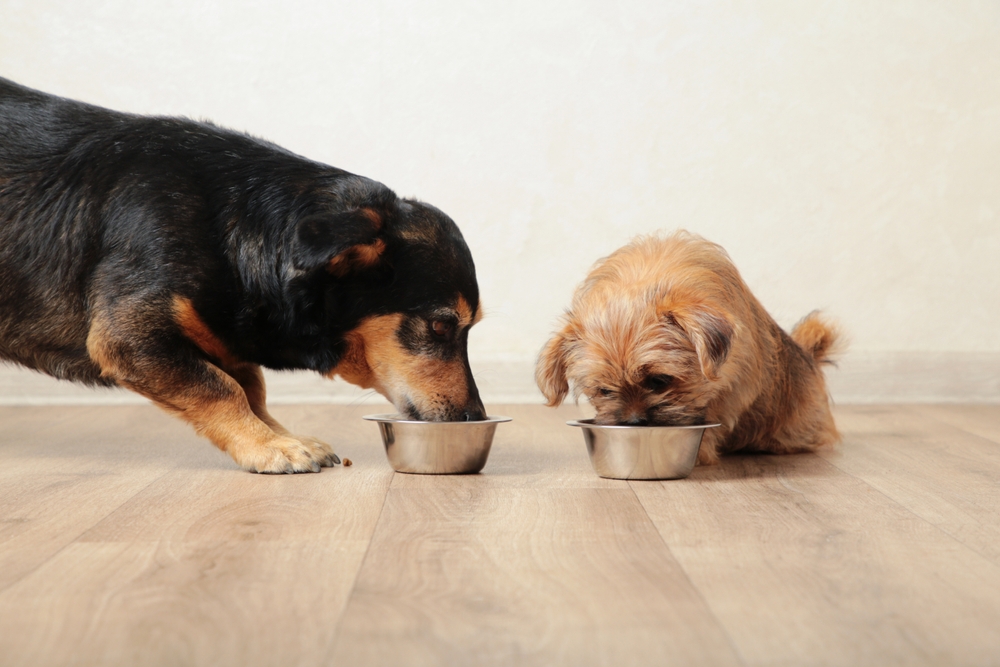
Frequently Asked Questions About Pet Calorie Needs
How fast should my pet lose weight?
Slow and steady is the right approach for both dogs and cats. A loss of 0.5 to 1% of body weight per week is a sensible general target. For cats, safe weight loss is even more gradual, as rapid reduction risks hepatic lipidosis. The right pace depends on starting weight, health status, and how well your pet is tolerating the new feeding amount.
My pet won’t eat the new food. What should I do?
A gradual diet transition over seven to ten days, blending increasing proportions of new food with the old, reduces the chance of rejection and prevents digestive upset. For cats, never attempt to withhold food to force acceptance of a new diet. If your cat refuses to eat for more than 24 to 48 hours, get in touch with us for guidance.
A Healthier Weight Means More Healthy Years
Getting portion sizes right is one of the most impactful things you can do for your pet’s long-term health. A pet at a healthy body condition moves more comfortably, faces lower risk of the conditions linked to excess weight, and typically lives longer. The difficulty is that pets are very good at looking hungry even when they are not, and saying no to that expression takes genuine resolve.
Small, consistent changes add up over months. You don’t need a perfect plan from day one; you need a reasonable starting point and a team willing to help you adjust it as you go. We are here to do exactly that. Get in touch to discuss your pet’s nutrition, or bring your questions along to their next wellness visit.





Leave A Comment