
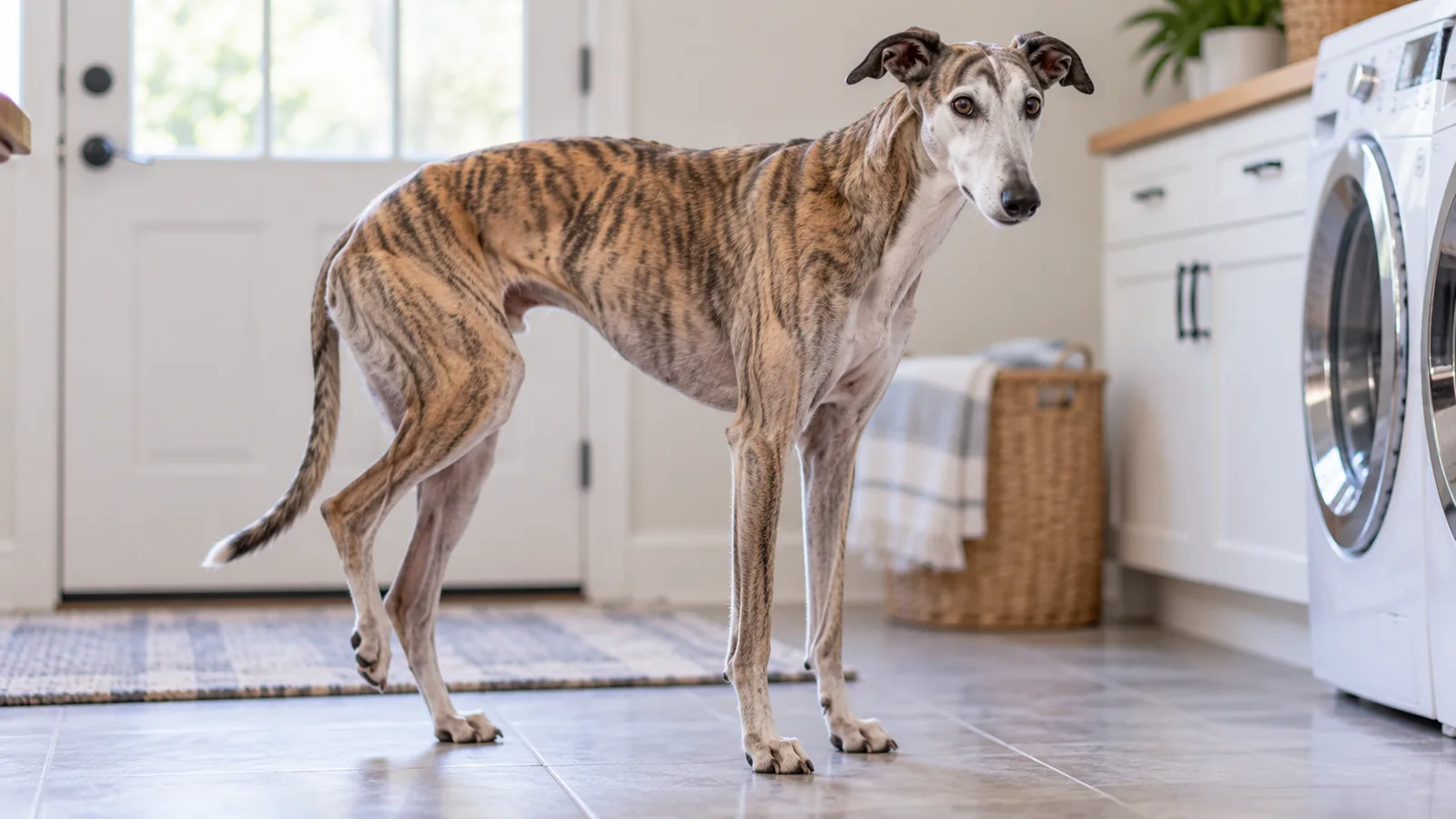
Knowing if your dog’s limp is something they can sleep off or requires surgery comes down to paying attention to symptoms and getting an exam done quickly. The symptoms of a torn cruciate can look suspiciously like a minor sprain: better after rest, worse after a long walk, stiff first thing. A few changes mean something else entirely: a knee that swells instead of settling, pain that breaks through the medication, or a limp that doesn’t improve needs us to look within a day or two, and a leg your dog suddenly will not put down at all should not wait overnight. For most dogs the joint is stabilised with surgery, and the real question is which repair suits your dog rather than whether to have one at all. Rest and pain relief hold the line while that decision is made, but they do not restore the knee, and the damage builds while you wait.
Deciding when to be seen and how to treat a bad knee is a lot to weigh on your own. The Vale Veterinary Group cares for dogs across our Devon practices, with X-ray imaging and orthopaedic surgery on site, so a knee heading the wrong way is assessed and treated by the same RCVS-accredited team who already knows your dog. If a leg gives way at the weekend, registered clients reach our own vets rather than an unfamiliar out-of-hours service. When you are unsure whether something can wait, tell us what you are seeing.
How a Cruciate Tear Usually Starts
- A torn cranial cruciate ligament, the dog's version of a human ACL, usually frays quietly over months. The day the leg gives way is rarely the day the trouble started.
- Rest and pain relief make a dog more comfortable without holding the joint steady, and an unstable stifle builds arthritis fast.
- Surgery is the dependable answer for most dogs. Size, age and the shape of the shin bone decide whether a bone-levelling repair or an extracapsular one fits better.
- Recovery runs to roughly eight to twelve weeks of controlled exercise, and what happens at home counts as much as what happens in theatre.
Why Do Cruciate Ligaments Tear in the First Place?
Most cases of cruciate ligament injury in dogs develop over months as the ligament frays under repeated load, so the sudden yelp on a walk is usually the last few fibres giving way rather than the start of the problem. Breed, build, body condition and the slope of the shin bone all set the pace.
The ligament sits deep inside the stifle, the knee joint on a dog's back leg. Its job is to stop the tibia sliding forward under the femur when the leg takes weight. Lose it and the bones shift a few millimetres with every stride.
- Breed sets the baseline: Labradors, Rottweilers, Boxers, Staffordshire Bull Terriers and Newfoundlands appear far more often than their numbers suggest, and the West Highland White Terrier leads the small breeds.
- Anatomy counts too: a steeply sloping tibial plateau, the backward tilt across the top of the shin bone, drives more shear through the ligament on every stride.
- Condition adds to it: extra kilos ask the ligament to carry more load all day and a dog short on thigh muscle has less help sharing the job.
- Exercise patterns matter: the weekday sofa dog who sprints and skids after a ball each Saturday asks the joint to absorb what it has never been conditioned for.
- Age stacks on top: degeneration builds through middle age, and once one knee has gone, many dogs damage the second cruciate within a year or two.
Weight creeps up half a kilogram at a time. Our annual health checks include a hands-on body score rather than a number on the scales alone, and it is one of the few cruciate risk factors a household can change.
What Does a Torn Cruciate Look Like at Home?
A dog who starts limping on a hind leg, improves over a few quiet days, then goes lame again after the next long walk is showing the pattern of a partial tear rather than a pulled muscle. A complete tear reads differently: the leg comes up mid-stride and stays up.
The quieter signs are easier to miss, especially in a stoical dog:
- Sitting sideways: the sore leg swings out instead of folding neatly underneath, one of the earliest reliable clues.
- Small refusals: hesitating at the stairs, needing a boost into the boot, taking a moment to rise after a nap.
- A firm swelling inside the knee: run your fingertips over both stifles and the thickening is often obvious.
- Stiffness that tracks exercise: worse the morning after a long walk, better after a lazy day.
- A shape change: more muscle over the shoulders, a visibly thinner thigh on the sore side within a few weeks.
Anything still there after three or four days deserves hands on the leg, and our in-house x-ray and ultrasound mean the knee is imaged and read at the same centre rather than sent away.
How Do We Tell a Cruciate Tear From the Other Things That Cause a Limp?
Confirming a cruciate problem starts with hands on the joint. We feel for the tibia sliding forward against the femur, using a cranial drawer test and a tibial compression test, and compare both stifles. A tense dog can hold that movement in check, so sedation is often needed before the findings mean much.
- Radiographs: X-ray imaging cannot show the ligament itself, but it reveals the joint swelling, the arthritic changes already present, and the tibial plateau angle that shapes which repair suits the knee.
- Advanced imaging: when the examination and the radiographs disagree, MRI gives the soft tissue detail that confirms a partial tear or meniscal damage before surgery is booked. Scanning happens at a referral centre, and we arrange it.
- The look-alikes: hip arthritis, lower back pain and an iliopsoas strain, a groin muscle injury, all produce hind-leg lameness. In an older large-breed dog, a bone tumour can look identical, one more reason to image rather than assume.
Small animal orthopaedic care and diagnostic imaging sit under one roof at our Devon centres, and the vet with hands on the knee is the same person reading the films.
What Happens If a Cruciate Tear Is Left to Settle on Its Own?
A torn cruciate doesn't knit back together, because the two ends can't reattach inside a joint that keeps moving. Arthritis in an unstable stifle begins within weeks of the tear rather than years later, since the joint surfaces grind against each other every time the tibia slides forward.
Left alone, the knee tries to splint itself:
- The joint capsule thickens into a firm ridge along the inside of the stifle, steadying the leg a little and stiffening it permanently.
- The meniscus, the C-shaped cartilage cushion between the bones, gets pinched in that abnormal movement and tears, bringing sharp pain and a click loud enough to hear across a kitchen.
- Thigh muscle melts away on the leg being spared while the sound hind leg takes the extra work, one reason so many dogs go on to damage the second ligament.
Surgery still works months down the line. It is simply slower going, with more arthritis banked and less muscle left to rebuild.
Can Rest and Anti-Inflammatories Fix It Instead?
Rest, anti-inflammatory medication and physiotherapy can settle a small dog's knee well enough to function, and for dogs under about 10 kg that route sometimes ends in a comfortable, usable leg. For most medium, large and giant breeds, the forces through the stifle are too high, and surgery gives better long-term function.
Done properly, conservative management is not taking it easy. It means six to eight weeks of lead-only exercise, no stairs, no jumping, prescribed pain relief with the monitoring that goes alongside it, a weight target, and physiotherapy to keep the thigh muscle from disappearing. Arthritis still advances faster than it would in a stabilised joint, which makes rechecks part of the plan.
While you wait for an appointment, keep the bathroom cabinet shut. Ibuprofen, paracetamol and aspirin are dosed for people, not dogs, and in a dog they cause stomach ulceration and kidney damage. Reaching for them also narrows what we can safely prescribe once your dog is here.
Size, age, other joint disease and what your household can realistically manage all feed into this decision. Before anything is booked, ring the surgery nearest you and we will talk it through.
TPLO, TTA, or Extracapsular Repair: Which One Suits Your Dog?
Which repair suits your dog depends on their size, age, anatomy and how hard they use the leg. One approach changes the shape of the bone so the joint no longer needs the ligament; the other places a strong implant outside the joint to hold it steady while scar tissue forms. Both aim at a stable stifle.
What Each Repair Actually Does
TPLO surgery reshapes the top of the tibia, flattening the backward tilt until the stifle holds itself steady under load without a ligament. It is the usual recommendation for medium, large and athletic dogs.
| Repair | What it does | Best suited to | Recovery outline |
| TPLO | A curved cut rotates the top of the tibia flatter, held by a plate while the bone knits | Medium, large and sporting dogs, and any stifle with a steep tibial plateau angle | Roughly 8 to 12 weeks of controlled exercise, with healing confirmed on repeat radiographs |
| TTA | The front of the tibia is advanced and fixed with an implant, changing the pull of the thigh muscles | Selected dogs, depending on joint shape and surgeon preference | Broadly the same as a TPLO |
| Extracapsular (lateral suture) | A strong implant sits outside the joint and does the ligament's job while scar tissue thickens around it | Smaller, quieter dogs, usually those under about 15 kg | A similar 8 to 12 week timeline, the implant mattering less as scar tissue matures |
Whichever route is taken, the meniscus is inspected during the operation and any torn portion trimmed, since a missed cartilage tear is a common reason a dog does not come fully sound. Most dogs are toe-touching within a few days and using the leg properly by the two-week mark.
A cruciate operation is a long anaesthetic in a patient who is often middle-aged. Pre-anaesthetic bloodwork runs in our in-house lab, and a nurse stays with your dog for anaesthetic monitoring from induction to a settled recovery. We carry out orthopaedic surgery at our own centres, and where a knee needs a board-certified orthopaedic surgeon we arrange the referral and then handle rechecks and rehabilitation here.
What Rehabilitation Looks Like Week by Week
Structured rehabilitation rebuilds the thigh muscle lost before surgery and restores the range of motion the stifle needs, and dogs who follow a staged programme get back to normal walks sooner than dogs left to recover on their own.
| Stage | Inside the joint | On the ground |
| Weeks 0 to 2 | The wound heals and the soft tissues quieten down | Lead trips to the garden only, with the gentle range-of-motion work we show you |
| Weeks 2 to 6 | Bone or scar tissue starts to take hold | Five to ten minute lead walks building gradually, with sit-to-stands and weight-shifting |
| Weeks 6 to 12 | Recheck confirms healing | Longer lead walks, gentle slopes, hydrotherapy for a dog slow to load the leg |
| From 3 months | Remodelling carries on quietly | Off-lead freedom returns in stages once the leg has been signed off |
Hydrotherapy and an underwater treadmill earn their keep for a dog still favouring the leg, and we refer to a qualified veterinary physiotherapist while staying involved in how it goes. Most of the muscle comes back through the home exercises, and you will have support through each stage of recovery rather than a printed sheet.
How Do You Keep the Repair Safe at Home?
Home is where a repair is protected or lost. The first six weeks are lead-only garden trips, no stairs, no sofa, no skidding down the hall to answer the doorbell. After that, walks lengthen a few minutes at a time. Flooring, body weight and boredom are what undo good surgery.
Surviving the Crate Rest Weeks
A stretch of crate rest goes better when the work shifts from the legs to the brain. Put the crate where your household spends its evenings, beside the sofa rather than in a spare room, and keep the day predictable.
A snuffle mat, a lick mat, dinner scattered through a towel, five minutes of nose-target training and a long-lasting chew tire a dog more than most households expect. A non-slip mat inside the crate stops getting up turning into a scramble. Keep toilet trips short and on a lead, and expect the first two nights to be noisy. If confinement is falling apart by week two, tell us. Sedatives and routine changes help, and a dog bouncing off the crate door is a real threat to the repair.
Protecting Both Knees for the Long Run
Warm-ups and cool-downs matter for both the repaired knee and the other side. Five minutes of slow lead walking at each end of a session stops the joint going straight from rest into full load.
Weight control does more for a repaired stifle than anything sold in a bottle. Picture the force rather than the scales: a single extra kilogram lands through that joint again on every stride, thousands of times a walk.
Indoors, runners and rugs across laminate and tiles help more than anything you can buy for the joint itself. A ramp saves the jump in and out of the car, and blocking the sofa for a few months saves the landing that follows. A preventative healthcare plan keeps weigh-ins and check-ups in the diary, catching a creeping half-kilo before it reaches the other knee.
Cruciate Surgery Questions Pet Families Ask Us Most
Does Pet Insurance Cover Cruciate Surgery?
Most UK lifetime policies cover cruciate disease, provided there was no sign of a problem before cover started or during the initial exclusion period. The clause that catches families out is bilateral cover: many insurers treat both knees as one condition, capping a second tear under the limit already used by the first. Read the policy before the other leg goes, and ask us for a written estimate and clinical history for the claim. We are glad to go through insurance and payment options with you.
Is My Dog Too Old for This Operation?
Age by itself does not rule your dog out of cruciate surgery. What decides it is heart and kidney function, body condition, arthritis in the other joints, and how much the leg is limiting daily life. With pre-anaesthetic bloodwork, a thorough physical examination and an anaesthetic plan built around the individual, plenty of eleven and twelve-year-olds come through a repair comfortably. The longer conversation is the senior dog with painful hips, since recovery leans heavily on the opposite hind leg.
Will My Dog Run and Jump Normally Again?
Most dogs return to full, comfortable function after a stabilising operation, and many working and sporting dogs go back to the job they did before. The knee carries some arthritis for life, usually showing as stiffness after an unusually long day rather than a limp. Repeated hard turning and ball launchers are worth giving up for good. Long walks, swimming, hill work and a dog who charges up the garden to meet you are all realistic once the leg is signed off.
You're Not Deciding About This Knee on Your Own
Cruciate decisions land at an awful moment: your dog is sore, the options sound technical, and it all seems to need answering at once. Slowing it down helps. We will examine the leg, show you what the radiographs say about that stifle, and set out what each repair means for your dog before anything is booked. The Vale Veterinary Group looks after dogs across Devon from the first lameness examination through surgery and orthopaedic aftercare, with rechecks as your dog ages to keep an eye on both knees. When you are ready, book an appointment and we will start with the examination.




Leave A Comment