
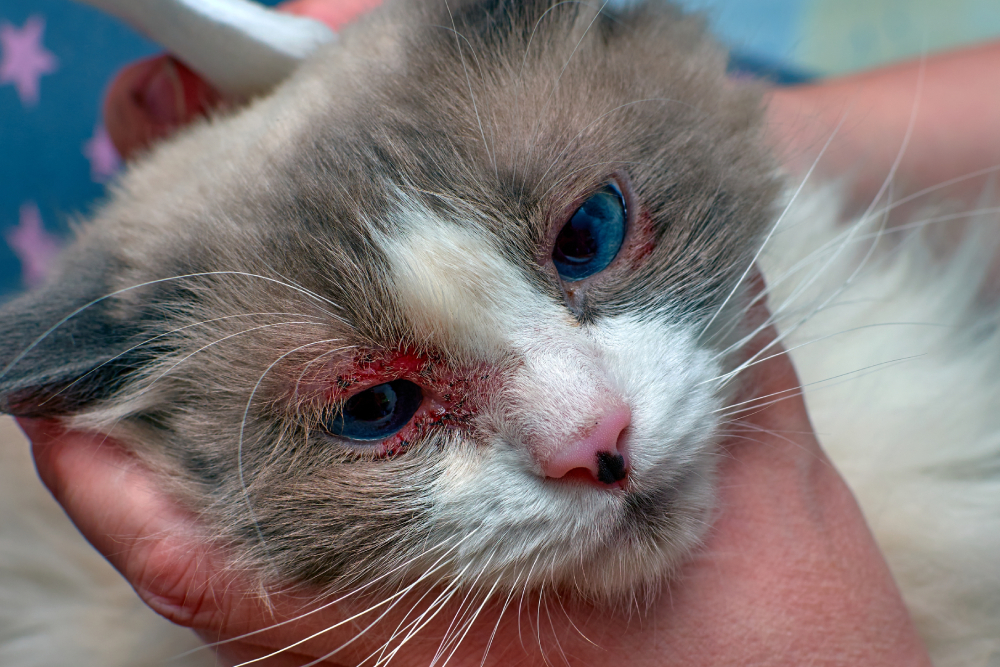
If you are constantly wiping discharge from your cat’s eyes, or the same watery, red eye seems to clear up only to return a few weeks later, feline herpesvirus may be part of the reason. Feline herpesvirus type 1 (FHV-1) is a common cause of upper respiratory infections and eye problems in cats, often first picked up when they are kittens. Once infected, a cat carries the virus for life, and periods of stress or illness can allow it to become active again. That can mean another round of watery or sticky eyes, conjunctivitis, sneezing or nasal discharge. The important part is making sure a “usual” runny eye is not hiding something more painful, particularly a corneal ulcer.
At The Vale Veterinary Group, we see cats with recurrent eye and respiratory problems at our Devon centres, and we can help you work out what is behind the latest flare-up and how best to manage it. Our ophthalmology care for cats allows us to check the eye carefully for conjunctivitis, corneal ulcers and other causes of discharge, then tailor treatment to what we find. Depending on your cat’s signs, that may mean antivirals, treatment for a secondary infection, pain relief or supportive care. Your cat should not have to simply live with sore, streaming eyes. If their eyes are constantly running or another flare-up has started, get in touch with us and we can take a look.
Recurring Sore Eyes: The Key Points
- Feline herpesvirus is a lifelong infection that most cats pick up as kittens, and stress or illness can wake it up again years later.
- Squinting, watery or sticky discharge, redness and a cat who turns away from bright light are the usual signs of a flare, and a painful corneal ulcer can hide behind any of them.
- There’s no cure, but antivirals, treatment for secondary bacterial infection, pain relief and a calmer household keep most cats comfortable and protect their sight.
- An eye held tightly shut, a new cloudy patch, or anything getting worse over hours needs looking at straight away rather than waiting to see if it settles.
What Is Feline Herpesvirus, and Why Does It Keep Landing in the Eyes?
FHV-1 is a highly contagious virus behind most feline upper respiratory infections and a large share of eye disease in cats. After the first bout settles, FHV-1 infection retreats into the trigeminal nerve and stays there for life, which is why most exposed cats become lifelong carriers even when they look perfectly well.
Feline herpesvirus spreads through the eye, nose and mouth secretions of an infected cat, and shared bowls or bedding carry it as readily as nose-to-nose contact.
The eye takes the brunt because the virus multiplies in the thin surface layers at the front of it: the conjunctiva, which is the pink tissue inside the lids and around the white of the eye, and the cornea, the clear window at the front. Damage there shows up straight away as redness and watering, and as an ulcer once cells are lost from the corneal surface. The nerve the virus hides in supplies that same surface, so a reactivation delivers it straight back to the tissue least able to shrug it off.
A kitten with a stuffed-up nose and gummy eyes at eight weeks old is often carrying the virus that will still be with them at eight years old. That’s one reason kitten checks are worth doing properly: we can settle the flare in front of us and flag early that this is a cat whose eyes may need watching for life, or vaccinate them to prevent severe from happening disease in the first place.
What Do Herpes Eye Problems Look Like?
Most flares open with one eye running and a cat who keeps screwing it half shut. Swollen pink tissue around the eye and constant blinking point to conjunctivitis, and in cats the herpesvirus sits at the top of the list of causes.
Light becomes uncomfortable, so many cats retreat to the darkest corner of the sofa. You might spot a bluish or grey haze over the clear part of the eye, the third eyelid creeping across from the inner corner, or a dull, roughened patch where the surface should be glossy. Some cats rub their face along the carpet or a chair leg, which does the cornea no favours at all.
Watery tearing that thickens into yellow or green eye discharge usually means bacteria have moved in behind the virus rather than a separate illness starting.
| Feature | First infection, usually kittens | Reactivation flare, usually adults |
|---|---|---|
| Which eye | Both, with the whole face involved | Often one eye, and often the same one each time |
| Other signs | Sneezing, nasal discharge, fever, off food | Sneezing mild or absent, appetite usually normal |
| Corneal changes | Fine, scattered surface erosions | Deeper or branching ulcers, sometimes long-standing scarring |
| How it runs | Dramatic, but usually settles over two to three weeks | Less alarming to look at, but far more likely to return |
Kittens tend to look far worse than adults do, and the dramatic ones often heal cleanly. A quiet adult flare with one squinting eye deserves just as much attention. If an eye has been running for more than a day or two, book them in with our small animal team rather than waiting it out.
Why Do Flare-Ups Keep Coming Back?
Reactivation is driven by stress far more than by anything you did or didn’t do. A new cat next door, a moved litter tray, or a week of visitors all register as life stressors to a cat, and the trigger behind a flare-up is often the one nobody in the house noticed.
Stress hormones dampen the immune control that keeps a latent virus quiet, it starts replicating in the nerve, and signs appear roughly a week later. That delay is why the cause gets missed so often: the sore eye turns up long after the cattery stay or the fortnight of grandchildren.
The usual culprits we hear about are:
- A cattery booking, a house move, or building work at home
- A new cat, dog or baby arriving, or a housemate cat leaving
- Any other illness, an anaesthetic, or a course of corticosteroids given for something else
- Queens raising a litter, and the kittens themselves around weaning
- Crowded homes where cats never get a moment out of each other’s sight
Cats home from a fortnight in a Devon cattery in August are a classic September presentation for us. Working out which trigger belongs to your cat is half the job, and who sleeps where, how many trays there are and which cat guards the hallway all come up during small animal appointments.
How Do We Work Out Whether It’s Herpesvirus?
The eye exam does most of the work here. Branching, tree-like ulcers that light up green under fluorescein stain are close to a signature for FHV-1 ocular disease, since no other feline corneal condition produces quite that pattern.
Plenty of herpes eyes never show that pattern, though, so the rest of the examination earns its keep. We measure tear production, because a dry eye causes much the same misery and needs an entirely different prescription. We check under the lids and behind the third eyelid for a grass seed, a hair or a scratch. And we think about the look-alikes: Chlamydia felis and Mycoplasma both produce a sticky feline conjunctivitis and both respond to treatments a herpes eye won’t.
Where the picture stays muddy, or an eye isn’t responding as it should, a conjunctival swab can be sent away for PCR testing. Feline Leukemia and Feline Immunodeficiency Virus can also affect the immune system response and are worth testing for. A stubborn eye issue sometimes turns out to be the first visible sign of something happening elsewhere in the body, so full blood testing for organ and immune system health is always a good idea.
How Is FHV-1 Keratitis Treated?
Treatment does three jobs at once: knock the virus back, stop bacteria taking advantage of a damaged surface, and keep your cat out of pain while the cornea repairs itself. What that looks like in practice depends on whether there’s an ulcer, how deep it goes, and how often the flares have been coming.
Antivirals, Drops, and Getting Them Into a Cat
The antivirals used in herpesvirus eye treatment suppress the virus rather than clear it, so finishing the full course matters.
Topical options such as ganciclovir gel or cidofovir go straight onto the eye several times daily. Oral famciclovir suits cats who won’t tolerate drops, or those whose signs go well beyond the eye. Alongside the antiviral we’ll often add a topical antibiotic where the surface is broken, a lubricant to protect it, and pain relief, because corneal pain is genuinely severe and cats are experts at hiding it.
One thing to avoid at home: never put leftover ointment from another pet, or anything containing a steroid, into a cat’s eye. Steroids can turn a small herpes ulcer into a deep, sight-threatening one within days. Human eye preparations aren’t a safe substitute either.
What does help between doses is gently bathing crusted discharge away with damp cotton wool, and warming your cat’s food so it smells stronger, since a cat with a blocked nose often goes off eating altogether.
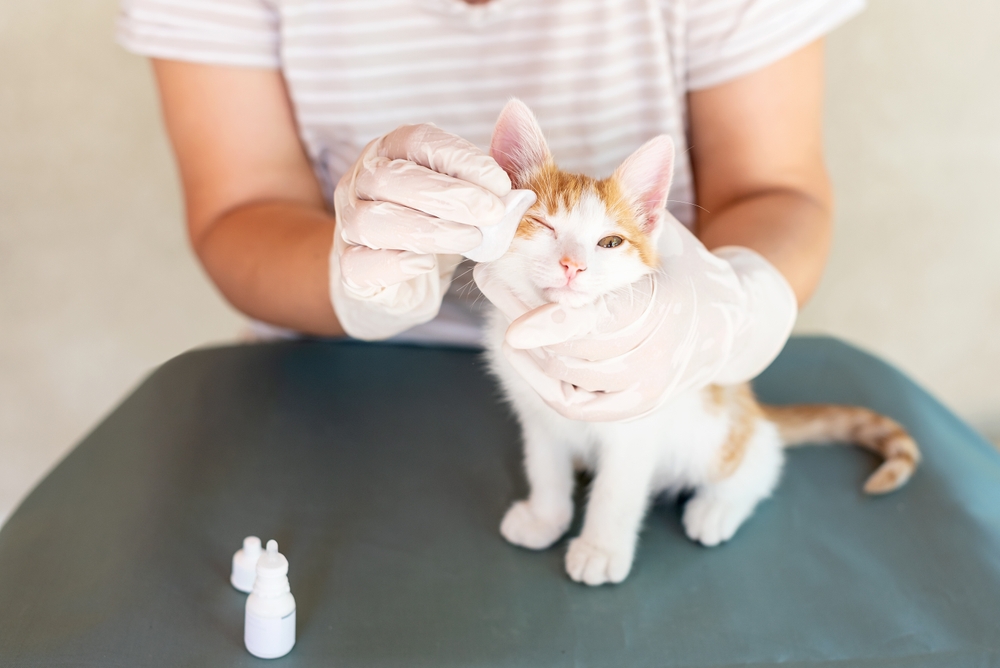
Four applications a day into a sore eye is a lot to ask of anybody. Our registered veterinary nurses will show you how to hold your cat, where to aim, and how to tell whether the drop went in at all.
When the Cornea Takes Longer-Term Damage
A minority of cats don’t simply flare and settle. The cornea itself changes, and those cats need a longer plan.
| Complication | What’s happening | What it usually needs |
|---|---|---|
| Stromal keratitis | Inflammation moves into the deeper corneal layers, leaving haze and new blood vessels | Closely monitored anti-inflammatory treatment given alongside antivirals |
| Corneal sequestrum | A patch of cornea dies and turns brown or black, common after long-standing surface damage | Lubrication and monitoring for small ones, surgical removal for painful ones |
| Symblepharon | Conjunctiva sticks down onto the cornea after a severe kitten infection | Surgical release in some cats, though scarring is often permanent |
| Dry eye | Tear production falls because the tear-producing tissue is damaged | Long-term tear replacement, sometimes with medication to stimulate tears |
| Eosinophilic keratitis | An immune-driven pink, gritty film creeps in from the edge of the cornea | Anti-inflammatory or immune-modulating treatment, usually ongoing |
Corneal grafts, sequestrum removal and freeing symblepharon adhesions are specialist ophthalmology procedures. We refer those cats to a veterinary ophthalmologist, arrange it for you, and look after the follow-up once they’re home. The medication, the rechecks and the long-term management all sit within our ongoing care for cats.
Can Anything Reduce How Often the Flares Happen?
Flare frequency responds well to some fairly unglamorous changes at home. Together they often turn a cat with sore eyes most months into one with the occasional mild episode.
Lowering the Stress That Sets Flares Off
Cats cope best when the world is boring. In a multi-cat home that means enough resources to go round: one litter tray per cat plus a spare, food and water bowls set well apart, and several beds, high perches and hiding spots so nobody has to negotiate for a safe place to sleep. Predictable feeding times help more than they sound like they should, and a synthetic feline pheromone diffuser plugged in where the cats spend most time takes the edge off for many households.
When stress is unavoidable, plan for it. A cattery stay, a house move or a new arrival is much easier to manage if we’ve talked it through beforehand rather than after the eye starts running.
Diet, Hydration and Immune Support
Lysine supplements were recommended for years and the evidence behind them is mixed at best. Some cats seem to do better on them, several good studies found no benefit, and a few suggested they made shedding worse in group settings. It’s reasonable to try, and equally reasonable to stop.
More reliable is the unremarkable stuff: a complete, good-quality diet suited to your cat’s life stage, plenty of water, and wet food for cats who drink very little. Keeping body condition steady matters too, since weight loss and immune trouble tend to arrive together, and diet, weight and early screening all get reviewed at annual health checks.
Vaccination, and Keeping It From Spreading in a Multi-Cat Home
The cat herpes vaccine won’t stop a cat becoming infected, and it won’t stop an existing carrier flaring. What it does is substantially reduce how severe the illness becomes, which in a virus that scars corneas is worth a great deal. The kitten vaccination course starts that protection early, and boosters keep it topped up through adult life.
In a multi-cat household, feline upper respiratory infection travels on shared bowls, bedding and hands, though the virus survives only about a day off the cat and ordinary household disinfectants destroy it. During an active flare, separate the bowls, wash bedding hot and wash your hands between cats. There’s no need to isolate a lifelong carrier from housemates who have almost certainly met the virus already.
When Does a Sore Eye Need Seeing Straight Away?
A flare that’s steadily improving can usually wait for a routine appointment. Pain that’s escalating, sight that’s changing, or a cornea that looks different today from yesterday can’t, because a deep ulcer can go from uncomfortable to sight-threatening in a couple of days.
Come in the same day for any of these:
- An eye clamped shut, or a cat who won’t let you near their face
- A cloudy, blue-grey or brown patch on the surface that wasn’t there before
- Swelling that changes the shape of the eye, or an eye that looks like it’s bulging
- Blood visible in the eye, or thick green discharge over a dull, pitted surface
- Sight that’s clearly changed: hesitating at the stairs, missing a jump, pupils wide in a bright room
- A cat who stops eating or drinking while the flare is running
- No improvement after two or three days of treatment, or a relapse the moment it stops
Timing changes the outcome here. A superficial ulcer caught early usually heals without a trace; the same ulcer left a week can scar across the line of sight. If an eye changes overnight or at the weekend, call us the same day rather than waiting, and outside opening hours we provide emergency cover 24 hours a day, seven days a week for registered clients.
What Cat Families Ask Us About Herpesvirus and Sore Eyes
Can I catch herpesvirus from my cat, or can the dog?
Feline herpesvirus only infects cats, so there’s nothing to worry about for you, the children or the dog. Human cold sores come from a completely separate virus, and dogs have a herpesvirus of their own that doesn’t cross over either. Cuddling a cat with a runny eye is fine. The handwashing that matters is between cats in the same house, because your hands are one of the ways it moves from one to another.
My cat’s eye looks better after three days. Can I stop the drops?
Stopping early is the most common reason a flare comes straight back. The eye looks comfortable well before the virus is properly suppressed, and cutting the course short gives it an easy opening. Finish what we’ve dispensed, and book the recheck even if things look perfect, because a fluorescein stain picks up damage the naked eye misses. If the drops are proving impossible, ring us and we’ll find another way rather than have you quietly give up.
Could herpesvirus cost my cat their sight?
Most cats with FHV-1 keep their vision for life. The risk sits with deep or neglected ulcers, sequestra left untreated, and long-standing inflammation that scars the cornea across the visual axis, and even then the damage is usually partial rather than total. Losing an eye altogether is uncommon and generally follows a severe rupture or an infection that got badly out of hand. Early treatment of each flare is what keeps that risk low.
Living With a Cat Who Carries Herpesvirus
A lifelong virus sounds heavier than it usually turns out to be. Most cats who carry FHV-1 have long stretches of nothing at all, a few sore weeks now and then, and a thoroughly normal life in between. What makes the difference is catching flares early, treating them properly, vaccinating on time, and gradually working out what sets your particular cat off, which is a puzzle we’d much rather solve alongside you than leave you guessing at.
If your cat’s eyes are streaming again, or you’d like a plan in place before the next flare arrives, book a consultation with The Vale Veterinary Group and we’ll take a proper look.






Leave A Comment