
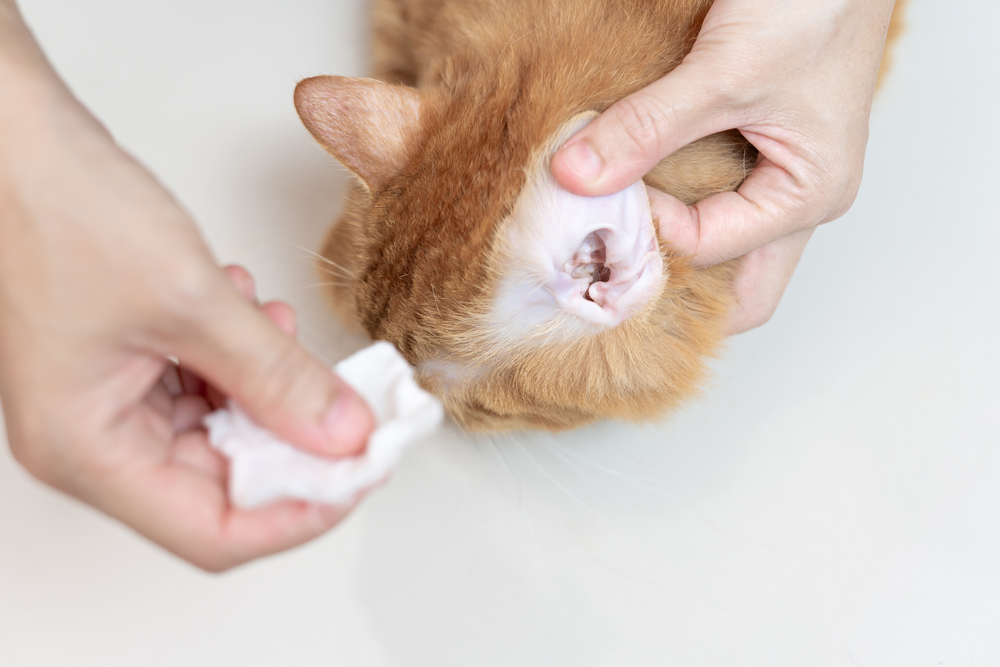
Looking at your pet’s ears and cleaning them are two separate jobs on different schedules, and most pets need far more of the first than the second. A quick weekly inspection suits nearly every dog and cat: pale pink skin, only a little wax, no odour and no soreness when you handle the flap. An ear that passes usually needs nothing done to it at all. Regular cleaning belongs to the pets who genuinely need it, such as swimmers, dogs with allergies or heavy drop ears, and any pet with a history of infection. Choosing the right cleaner and knowing when not to clean are just as important as recognizing what a healthy ear looks like.
The Vale Veterinary Group sees pets across our Devon centres and ears get a proper examination at every routine health check, so you know what healthy looks and smells like on your own dog or cat. An ear that is already red, sore or discharging should not wait for a routine visit, so we would rather book you in with a vet within a day or two and examine a sample under the microscope in our own laboratory, treating what is actually growing instead of guessing at a cleaner. If your pet is shaking their head or scratching, or you simply are not sure those ears need cleaning at all, get in touch with us.
The Big Picture on Routine Ear Checks
- A weekly look and sniff is the habit worth building; cleaning is a separate job that most healthy ears don’t need at all.
- Head shaking, redness, discharge, a sour smell or pain when you touch the ear mean a vet should look before anything goes into the canal.
- Swimmers, allergy-prone dogs and any pet with a history of infection need a schedule set for them rather than a general rule.
- Cotton buds, alcohol, hydrogen peroxide and human ear products don’t belong anywhere near a dog’s or cat’s ears.
Why Bother Checking Ears That Look Perfectly Fine?
A weekly look and a quick sniff take about fifteen seconds, and they’re the cheapest way to catch a problem while it’s still nothing worse than a bit of extra wax. Ears that go unwatched tend to announce themselves once they already hurt, and a painful canal is far harder to sort out than a slightly grubby one.
The check is low-stress for most pets, as long as it isn’t reserved for emergencies. Lift the flap, look at the colour of the skin, have a sniff, then run a thumb gently around the base and watch the reaction. A dog who only gets handled when something’s wrong learns to duck. A dog who gets handled every Sunday with a bit of cheese involved doesn’t.
Cooperative care means pairing ear handling with treats and sessions short enough to end well, so a dog learns to offer an ear rather than brace against being held still. Puppies and kittens pick this up fastest, which is one of the quieter benefits of starting early: a young dog whose ears have been touched kindly and often becomes a much easier patient at six years old, when those ears really do need medicating twice a day.
What Makes Dog and Cat Ears So Prone to Trouble?
The canal in dogs and cats is L-shaped, dropping vertically before turning in towards the eardrum. Anything that gets down there, whether that’s water, wax, pollen or debris off a hedgerow, has a real job getting back out. Warm, dark and slightly damp is exactly what yeast and bacteria are looking for.
On top of that shared design, some pets carry extra risk from their anatomy:
- Heavy drop ears: Spaniels, Basset Hounds and many retrievers wear a flap over the opening that cuts airflow and holds humidity in.
- Hair in the canal: Poodles, Bichons, Shih Tzus and the doodle crosses grow hair inside the canal that traps moisture and catches grass and grit.
- Narrow canals: Shar Peis, French Bulldogs and some Persians have tight canals that hold wax and swell shut quickly once inflamed.
Cats get away with never needing a cleaning more often, though not always. Ear mites in kittens and inflammatory polyps in young cats both turn up as one grubby, itchy ear. The small animal care we provide includes matching the ear plan to the animal in front of us, because a Cocker Spaniel with weighty flaps and a Siamese with wide-open ears ask completely different things of a household.
Which Ear Signs Mean It’s Time to Ring Us?
Head shaking, scratching at one side, rubbing the face along the sofa, redness or swelling on the inside of the flap, brown or yellow discharge, a sour smell, or a yelp when you touch the base all mean the ear needs examining rather than washing. Caught early, most of these settle quickly.
The discharge often hints at the cause. Dry, crumbly, coffee-ground debris points towards mites, especially in cats. Creamy yellow or green material with a strong smell suggests bacteria or yeast have taken hold. A flap that swells soft and squashy afterwards is an aural haematoma, which needs treating rather than time. A head tilt indicated middle to inner ear disease, or material like a grass awn lodged in the canal.
A few things tend to make matters worse before anyone gets here. Don’t flush the ear to tidy it up first, because that washes away the sample we need and can push material deeper. If your pet has a damaged ear drum, the wrong cleaner can cause them to lose their hearing. And never reuse leftover drops from a previous episode or from another pet in the house. If something looks wrong, ring your nearest centre and we’ll get your pet seen by a vet.
How Often Should Ears Be Inspected and Cleaned?
Look weekly, clean only when there’s a reason. Plenty of healthy dogs and most cats never need a scheduled clean at all, while dogs who swim, itch, carry heavy flaps or have had infections before may need a cleaner every week or two. That figure should come from someone who has seen down the canal.
The Weekly Look, and a Cleaning Schedule That Fits
What you’re checking takes seconds: pale pink skin rather than red, a small amount of pale wax, no smell, no wet patches, no crusting. The ear flap shouldn’t have flaky, thickened, or darkened skin, and there should be no pain when handling the ear. If it looks the same as last week, put the bottle away. Over-cleaning is a real problem rather than a theoretical one, because flushing a healthy canal strips the wax layer that keeps the skin barrier working and leaves it dry, itchy and primed for the trouble you were trying to prevent.
Our nurses can build a schedule around your pet’s history, coat and lifestyle, and demonstrate the technique on a calm day rather than a sore one.
| Your pet | Inspect | Clean |
| Healthy ears, no history | Weekly look and sniff | Rarely, and only on veterinary advice |
| Drop ears or hairy canals | Weekly | Every week or two if wax builds up |
| Regular swimmer | Weekly, plus after each swim | Dry after every session; cleaner as advised |
| Allergy-prone dog | Weekly, more often in flare season | Often weekly while the skin is flaring |
| History of infection | Twice weekly | Follow the plan we set together |
| Cats and kittens | Weekly look | Usually never, unless we’ve asked you to |
Which Pets Need a Closer Eye?
Some ears never cause bother. Others tell you every August. Dogs with seasonal allergies or underlying health issues, spaniels and retrievers with weighty flaps, dogs who swim in the Exe or the Culm most weekends, and any pet who has had two or more infections in a year all belong in the closer-watch group. A pet whose ears keep flaring isn’t unlucky. There’s usually something underneath driving it, and diagnostic testing is how that gets pinned down, whether the answer turns out to be allergic skin, a hormonal problem or a seed picked up on a June walk. If you have a new puppy with floppy ears, ask us how to start ear inspections early and with the right training; it’ll make your life easier later.
When Should the Ear Cleaner Stay in the Cupboard?
Some ears shouldn’t be touched with a cleaner at all. There’s a clear line around when not to clean an ear at home: swelling, warmth, obvious pain, bleeding, or thick discharge all mean the bottle stays on the shelf until someone has looked inside the canal properly.
Otitis externa, inflammation of the outer canal, is the diagnosis behind most smelly, painful ears, and repeated episodes can scar and narrow that canal until it no longer drains on its own. The eardrum is the other reason for caution. A badly infected ear can have a ruptured drum with no outward sign at all, and liquid poured in from above then lands in the middle ear, where some solutions cause lasting damage or hearing loss. Nobody can judge that from the outside.
A head tilt, circling, or a sudden wobble in a pet who was steady yesterday points past the canal towards otitis media and interna, where infection has reached the middle or inner ear and a rinse at home can do real harm. That one isn’t a wait-and-see: contact us straight away, and our emergency cover runs 24 hours a day, seven days a week for registered clients. For anything else that looks angry rather than urgent, book an examination before putting anything in.
How Do You Clean Your Pet’s Ears Safely at Home?
Once we’ve confirmed the ears are healthy enough for it, the whole of cleaning a dog’s ears is simple:
- Fill the canal with an approved solution. Be generous.
- Massage the base for twenty to thirty seconds while you hear a soft squelch of the fluid in the canal.
- Let your dog shake. We recommend doing this outside, as it can be messy.
- Wipe away only what you can actually see with a soft cloth or cotton.
Set it up to go well. Choose a quiet moment after a walk rather than before dinner, keep treats within reach, and pick a spot where your dog can’t escape and hide under the bed halfway through. Cotton wool or a soft pad does the wiping. Cotton buds never go into the canal, on any pet, for any reason, but you can use them on nooks and crannies of the ear flaps. If your dog pulls away or acts painful, stop and tell us, because an ear that hurts is saying something worth hearing.
Cats Need a Lighter Touch
Cleaning a cat’s ears is a shorter, gentler job of a few drops, a light massage and one wipe with a cotton pad, and most healthy cats never need it on any schedule at all. Wrap a wriggler in a towel with only the head out, work briskly, and finish while things are still going nicely rather than pushing for a spotless result. Both ears get a close look at every kitten check, which gets a young cat used to being handled long before any medicating is needed.
Ears After a Swim or a Bath
After a swim or a bath, getting water out of a dog’s ear means towel-drying the flap and the opening, then using a veterinary drying solution. River dips, estuary swims and the garden paddling pool all count. For a dog in the water most weekends, a drying solution after each session beats an occasional deep clean, and lifting the flaps for a few minutes at home lets the canal air out. Dogs with long hair should have the fur trimmed out neatly; avoid plucking ear hair from the canal unless we advise it, since some pets can develop ear canal inflammation from the process.
Are All Ear Cleaners Safe for Dogs and Cats?
Cleaners vary enormously, and several sold for pets can do harm. Alcohol, hydrogen peroxide, vinegar and essential oils sting inflamed tissue, some cause chemical burns, and a few are toxic, particularly to cats. A product worth using is pH-balanced for the canal and chosen for the problem it’s meant to solve.
What to Avoid on the Shelf
“Natural” on a label isn’t a safety claim, and plenty of pet-marketed remedies contain the very ingredients that make a sore ear sorer. Human wax softeners and drops are never appropriate either, since they’re formulated for a straight canal and a person who can say when it stings, so the guessing needs to stop before the checkout.
| What’s in the bottle | Why it’s a problem |
| Alcohol or surgical spirit | Burns raw skin and dries the canal out |
| Hydrogen peroxide | Irritates, foams, and leaves moisture behind |
| Vinegar or lemon juice | Acidic on inflamed tissue and painful |
| Tea tree and other essential oils | Toxic to cats and dogs, especially undiluted |
| Human ear drops | Made for a straight canal, not an L-shaped one |
| Plain water | Wets the canal without lifting anything out |
What Makes a Veterinary Cleaner Different
Which cleaner and which medication a pet actually needs is settled by ear cytology, a swab read under the microscope that separates yeast from bacteria before anything goes into the canal. Good products are built for a purpose: gentle surfactants to lift debris, drying agents for a wet canal, wax-softening ingredients for a greasy one. A dog with allergic skin needs something different from a dog with thick bacterial discharge, and a suspected eardrum problem rules several options out completely. Ask us which suits your pet before you buy one, or we can show you what we use on your next visit.
What Happens During a Professional Ear Exam?
An otoscope shows the full length of the canal and the eardrum at the end of it, which is the structure that decides whether medicated drops are safe. Where there’s discharge, a swab tells us whether yeast, bacteria or mites are behind it.
At home you can see the flap and the first centimetre or so. The trouble usually sits deeper, and so does the cause:
- Allergies: Environmental and food allergies are the commonest driver of recurring itchy ear problems, which is why a dog whose skin flares in spring so often has ears that flare alongside it.
- Grass seeds: A seed picked up on a Devon footpath causes sudden, one-sided, frantic head shaking, and it has to be removed rather than treated.
- Polyps and growths: Young cats in particular develop inflammatory polyps that block the canal and won’t budge with drops.
- Hormonal disease: Hypothyroidism and Cushing’s disease both alter the skin and the wax it produces, and repeat infections are sometimes the first clue.
- Ear mites: More often kittens and puppies, and straightforward to confirm on a swab.
Finding the driver is what stops the merry-go-round, and it sometimes means working the skin up alongside the ear instead of treating the same infection four times in a year. Checks are still worth having when everything looks fine, which is part of what a preventive healthcare plan is for. Early changes are small ones, and they’re easier to spot against a record than from memory.
Ear Questions We Hear at Our Devon Centres
Can I use a cotton bud if I’m careful?
Cotton buds don’t belong in the canal, however steady your hand. That L-shaped bend means a bud pushes wax and debris around the corner and packs it against the eardrum instead of lifting anything out, and a head shake at the wrong moment can drive it further still. Wipe only the part of the ear you can see, using cotton wool or a soft pad, and let the cleaning solution do the work further down.
My dog’s ears smell yeasty but he seems happy. Is that worth an appointment?
A smell means something is overgrowing, and it’s worth a visit even in a dog who’s still eating, walking and sleeping normally. Dogs are stoic about ears that have been mildly uncomfortable for weeks, so cheerfulness isn’t much of a guide. Sorting it while the canal is only inflamed usually means a short course of treatment. Leaving it until he’s crying and shaking his head often means a longer one, and repeated bouts can change the canal permanently.
Do cats and kittens get ear mites, and do they spread?
Ear mites are common in kittens and they pass easily between animals living together, including from cat to dog. The giveaway is dark, crumbly debris that looks like coffee grounds, along with furious scratching and head shaking, and a swab under the microscope confirms it. Every in-contact pet in the house usually needs treating at the same time, otherwise the mites simply move back in a fortnight later. Cleaning alone won’t clear them, and a mite-damaged ear often picks up a secondary infection that needs treating too.
Keeping Those Ears Comfortable for the Long Run
Most ears need watching more than washing, and a weekly look, sniff and gentle touch around the base does the bulk of the work. Ear problems that keep coming back are wearing, and that pattern is rarely anything you’ve done wrong. The Vale Veterinary Group looks after dogs and cats across Cullompton, Tiverton, Honiton and Uffculme, and we’d far rather check an ear you’re unsure about than treat one that’s been sore for a fortnight. If those ears are bothering your pet, or you just want to know whether you should be cleaning them at all, get in touch.




Leave A Comment