
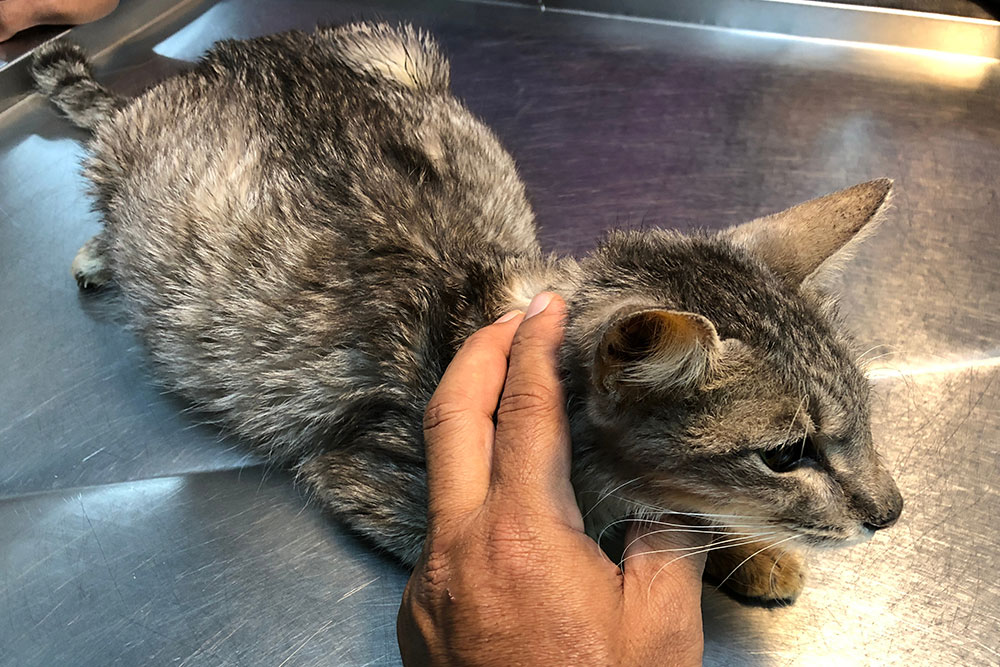
Sudden weakness, pale or yellow-tinged gums, and unexplained bruising in a dog or cat can be signs of an autoimmune blood disease, where the immune system turns on the body’s own cells. The two main forms are immune-mediated haemolytic anaemia (IMHA), in which red blood cells are destroyed faster than the body can replace them, and immune-mediated thrombocytopenia (ITP), in which platelets are stripped from the bloodstream and small bleeds show up in the gums, skin, and whites of the eyes. Tick-borne infections such as babesiosis can trigger the same picture, which is why a careful workup matters. Both conditions can deteriorate within hours, so recognising the early signs is the difference between a treatable illness and a critical one.
At The Vale Veterinary Group, our in-house laboratory and ultrasound at our Devon centres let us start the workup the same day a sick pet arrives and narrow down what is driving the bleeding or weakness. We also screen for the tick-borne infections that can sit behind an autoimmune flare, so the treatment plan addresses what is actually driving the disease. If your dog or cat’s gums look pale or yellow, or you spot pinpoint bruising on the belly, reach out to our team and we will see them straight away.
The Short Version for Autoimmune Blood Diseases
- Autoimmune blood diseases happen when the immune system attacks the body’s own red blood cells (IMHA) or platelets (ITP), and both can turn critical within hours.
- Pale or yellow gums, unexplained bruising, dark urine, sudden weakness, and fast breathing at rest are the signs that warrant same-day care rather than waiting to see how things go.
- Many cases are secondary to an underlying trigger such as a tick-borne infection, so ruling those out is essential to stop the disease coming back.
- Fast, in-house diagnosis lets treatment start during the same visit, and most pets have a genuine chance at recovery when their families act early.
What Happens When the Immune System Attacks Its Own Blood?
Autoimmune blood disease develops when the immune system, which normally hunts down bacteria and viruses, mistakenly flags the body’s own blood cells as the enemy and destroys them. Depending on which cells are targeted, this leads to dangerous anaemia or dangerous bleeding, sometimes both.
Immune-mediated diseases fall into two groups, and the difference shapes the whole treatment plan. Primary IMHA and ITP have no identifiable outside trigger, so the aim is to calm the misfiring immune system itself, while secondary cases also require finding and treating whatever set the reaction off. Miss that hidden trigger in a secondary case, and the disease keeps relapsing no matter how hard the immune system is suppressed. This is one reason routine blood and urine screens that catch disease early matter so much, since they often flag the earliest changes before a pet looks obviously unwell.
What Is IMHA and Why Does It Escalate So Fast?
IMHA, immune-mediated haemolytic anaemia, is the immune system destroying red blood cells faster than the bone marrow can replace them. Because those cells carry oxygen to every organ, their loss starves the body fast, which is why a dog or cat can slide from mildly tired to critically ill in hours.
What makes immune-mediated haemolytic anaemia so easy to underestimate is how ordinary it looks at first: the earliest signs read like a simple off day, yet the same pet may be struggling to stand a few hours later.
What Are the Early Signs of IMHA in Dogs and Cats?
The earliest signs of IMHA are quiet ones: a dog who tires on the usual walk, a cat who sleeps more than normal, breathing that looks a touch faster at rest. As red cell numbers drop, the signals get harder to miss. Pale or jaundiced gums are one of the most reliable early clues, often showing up alongside unusual tiredness, faster breathing, dark or orange-tinged urine, and a fading appetite. Healthy gums are bubblegum pink; gums that look white, grey, or yellow are a reason to come in today. There is also a documented breed predisposition, with breeds such as Cocker Spaniels affected more often, so families with higher-risk breeds should treat these early signs with particular urgency.
What Causes Secondary IMHA?
Secondary IMHA has an identifiable trigger sitting behind it, and that trigger has to be found and treated or the disease keeps returning. The main categories worth ruling out include:
- Tick-borne infections: babesiosis and related infections are among the most important triggers to screen for, especially in the UK’s now near-continuous tick season.
- Haemotropic mycoplasma in cats: this blood parasite can quietly drive the same red cell destruction.
- Cancers: lymphoma and haemangiosarcoma can both provoke an immune attack on red cells.
- Viruses: in cats, feline leukaemia virus is a recognised driver.
- Toxins: zinc toxicosis, often from a swallowed coin, can destroy red blood cells directly.
- Drugs: certain medications can trigger the immune attack on red cells.
- Leptospirosis: another infectious trigger worth ruling out.
- Envenomations: snake bites can set off red cell destruction too.
How Do Blood Clots Complicate IMHA?
The cruellest twist in IMHA is that the same pet losing red blood cells is also at high risk of forming dangerous clots rather than bleeding freely. These clots are one of the leading causes of death, which is why hospitalisation and close monitoring matter so much; a clot that lodges in the lungs can be fatal within minutes. Signs of a possible clot that need immediate care include:
- Sudden difficulty breathing: fast, laboured, or open-mouthed breathing that comes on quickly.
- Sudden weakness or collapse: especially in the back legs, or an inability to get up.
- A distended, painful belly: which can signal bleeding or a clot in the abdomen.
- Sudden behaviour or coordination changes: disorientation, a head tilt, or stumbling.
If any of these appear in a pet already diagnosed with, or being investigated for, autoimmune red cell destruction, treat it as a true emergency. Our 24-hour emergency care for registered clients means there is always someone to ring, day or night, so please do not wait until morning.
What Is ITP and How Does It Cause Bleeding?
ITP, immune-mediated thrombocytopenia, is the immune-driven destruction of platelets, the tiny cells that plug leaks and let blood clot. Without enough platelets, bleeding can start with no trauma at all, and it can be serious inside the body even when the outward signs look minor.
That mismatch is what makes immune-mediated thrombocytopenia dangerous: a few pinpoint spots on the belly can sit alongside significant bleeding in the abdomen or gut, so what you see rarely tells the whole story.
What Does ITP Look Like at Home?
The visible signs of ITP come from tiny bleeds that show up where the skin is thin and the fur is sparse. Look for these clues:
- Petechiae: pinpoint red or purple spots, most obvious on the belly, gums, and inner ear flaps.
- Unexplained bruising: larger purple patches on the skin or gums with no injury to explain them.
- Nosebleeds without a cause: bleeding from the nose when nothing has knocked or scratched it.
- Blood in urine or stool: pink or red urine, or dark, tarry droppings.
- Wounds that bleed too long: a small nick or a lost tooth that keeps oozing far longer than it should.
What Triggers ITP in Dogs and Cats?
Like IMHA, ITP is often secondary to something else that needs to be found. Triggers include tick-borne infections, leptospirosis, and the distemper virus, along with some medications, cancers, and a rare link to recent vaccination. That vaccination association is genuinely rare, and vaccines prevent far more suffering than they could ever cause, so this is not a reason to skip them.
What Is Evans Syndrome?
Evans syndrome is the immune system attacking red blood cells and platelets at the same time, combining the anaemia of IMHA with the bleeding risk of ITP in one patient. Because both problems have to be controlled together, these cases demand intensive monitoring and frequent medication changes.
With both immune-mediated conditions running at once, the red cells and platelets can recover at different speeds, so the team watches both counts closely and adjusts the immunosuppression until each one settles. Many of these patients need a spell of hospital care while that balance is found.
How Are Tick-Borne Diseases Linked to Blood Disorders?
Tick-borne infections sit behind a large share of secondary IMHA and ITP because several of them either trigger the immune attack or mimic it so closely that testing is the only way to tell them apart. Treating the apparent primary disease alone simply leads to relapse.
Because tick activity in the UK now runs close to year-round, infections such as Lyme disease matter directly here. The infections most worth knowing about include:
- Babesia: a parasite that destroys red blood cells directly; more common in Pit Bulls and Greyhounds and able to spread dog-to-dog through bites. Babesia is a classic driver of secondary IMHA.
- Ehrlichia and anaplasma: both can lower platelet counts and set off immune-mediated bleeding.
Because these infections mimic primary disease so well, tick-borne disease testing is a standard part of the blood disorder workup in our small animal patient care, not an optional extra.
When Should I Rush My Pet to the Vet?
Some signs mean same-day care, not tomorrow. Sudden weakness or collapse, pale or yellow gums, unexplained bruising or pinpoint spots, laboured breathing at rest, dark urine, or marked lethargy all need an immediate visit, because IMHA and ITP can deteriorate within hours:
- Sudden weakness or collapse: an inability to stand, or fainting.
- Pale, white, or yellow gums: any colour other than healthy pink.
- Unexplained bruising or petechiae: pinpoint spots or purple patches with no injury.
- Laboured breathing at rest: fast, heavy, or open-mouthed breathing while calm.
- Dark or blood-tinged urine: orange, brown, or red urine.
- Marked lethargy: a pet who is unusually flat, dull, or hard to rouse.
When any of these show up, come straight in or ring ahead so our team is ready the moment you arrive. Calling first lets us prepare, but never delay leaving to make the call.
How Do You Diagnose an Immune-Mediated Blood Disease?
Diagnosis starts with a careful history and a hands-on exam, then moves to blood tests that confirm what is happening and, just as importantly, why. The goal is to separate a primary immune attack from a secondary one, because that answer changes the treatment. Same-day, in-house results mean we can often start treatment during the first visit.
| Diagnostic step | What it tells us |
| History and physical exam | Recent travel, tick exposure, new medications, and a check of gum colour, bruising, and pulse |
| Complete blood count and blood smear | How low the red cells or platelets are, and whether cells are clumping or being destroyed |
| Coombs test | Whether antibodies are coating the red blood cells, a hallmark of IMHA |
| Reticulocyte count | Whether the bone marrow is trying to replace lost red cells |
| Chemistry panel | How the organs are coping and whether other disease is present |
| Tick-borne disease screening | Whether an infection such as babesia is the hidden trigger |
| Cancer and toxin evaluation | Imaging or further tests when a tumour or poison is suspected |
When deeper imaging is needed to look for an underlying tumour or bleeding, our in-house imaging (ultrasound, endoscopy, and x-ray) lets us look inside the same day rather than waiting on a referral.
How Are IMHA and ITP Treated?
Treatment runs on two parallel tracks: switching off the misdirected immune attack, and supporting the body while blood counts slowly recover. In secondary cases a third track, treating the underlying trigger, matters too, because immunosuppression alone will not hold if an infection or tumour keeps feeding the reaction.
Every plan is built around the individual pet, mapped to the diagnosis, the severity, and a conversation with you about how your pet is doing day to day. That is the principle behind good immune-mediated disease treatment.
How Is IMHA Treated?
IMHA treatment aims to stop red cell destruction, prevent dangerous clots, and keep oxygen flowing while the body rebuilds its supply. The main components include:
- Immunosuppression: steroids, often with a second immune-modulating drug, to switch off the attack.
- Anti-clotting medication: blood thinners for higher-risk patients, given the clotting danger IMHA carries.
- Blood transfusions: blood transfusions to buy time for severely anaemic pets whose oxygen levels are critically low.
- Therapeutic plasma exchange: filtering harmful antibodies out of the blood in severe or refractory cases.
- Targeted antimicrobials: specific antibiotics or antiparasitics when an infectious trigger like babesia is confirmed.
How Is ITP Treated?
ITP treatment works to stop platelet destruction and help the count climb back to a safe level. The usual building blocks include:
- Corticosteroids: the first-line therapy to calm the immune system and slow platelet destruction.
- Vincristine: a medication that nudges the bone marrow to release more platelets into circulation.
- Intravenous immunoglobulin: reserved for critically low counts when a faster response is needed.
- Splenectomy: removing the spleen, a later-stage option for stubborn cases that do not respond to medication.

How Does Tick Prevention Lower the Risk?
Tick prevention lowers the risk by keeping infected ticks off your pet, so the tick-borne infections that can trigger secondary blood disorders never get a foothold. Every gap in cover is a window where a single tick can set the whole cascade in motion, which is why continuous, year-round protection matters so much.
Prescription products are significantly more reliable than most over-the-counter options, in how well they work and how long they last. Tick prevention works best when it is continuous and matched to your pet’s lifestyle and local risk. We will help you choose the right product, and flea and tick prevention is included as a part of the Premier Paws Club, making it easy to maintain proper coverage.
IMHA and ITP: Questions Dog and Cat Families Ask
Can a dog or cat fully recover from an autoimmune blood disease?
Many do. With prompt treatment, a good number of pets go into remission and return to a normal life, though the outlook depends on the severity, whether there is an underlying trigger, and how quickly treatment starts. Some pets need long-term medication or occasional flare management. Recovery is often a marathon of gradual improvement rather than an overnight fix, and close monitoring during the first weeks makes a real difference.
Is an autoimmune blood disease contagious to my other pets or my family?
The autoimmune process itself is not contagious, so IMHA and ITP cannot spread from pet to pet or to people. The one thing to be aware of is that some of the infectious triggers, such as certain tick-borne diseases and leptospirosis, can affect other animals or, in a few cases, humans. That is another reason we work to identify and treat any underlying infection, and why good tick prevention protects the whole household.
My pet seems fine but has pale gums. Should I still worry?
Yes, pale gums are worth a same-day check even when your pet is acting relatively normal. Anaemia can develop faster than behaviour changes catch up, so a pet can look reasonably bright while their red cell count is dropping. Pressing gently on the gum should turn it white then pink again within a couple of seconds; gums that stay pale, or look white, grey, or yellow, are a reason to be seen today rather than to wait and watch.
Turning a Frightening Diagnosis Into a Plan
A diagnosis like IMHA, ITP, or Evans syndrome is frightening, and that fear makes complete sense when your dog or cat has gone downhill so fast. Here is the reassuring part: fast, accurate diagnosis gives most pets a genuine chance at recovery.
Recovery odds are strongest when the early warning signs are spotted and acted on quickly. You know your pet better than anyone, so if something feels wrong, trust that instinct.
If you have noticed pale gums, unexplained bruising, or a sudden drop in energy, please get in touch to book a visit. Our Devon practices will start the workup right away and go through every option with you, so you are never facing this alone.






Leave A Comment