
Many families think a cat’s stiffness, longer naps, and reluctance to jump are simple ageing, but in older cats those changes are often the quiet signs of arthritis pain. Osteoarthritis is remarkably common in cats, affecting the majority over about twelve years old, and because cats instinctively hide discomfort, it rarely shows up as an obvious limp. It is also progressive, which means the joints keep deteriorating whether or not the pain is being managed. The encouraging part is that modern feline arthritis care works through several routes at once, easing pain, protecting the joints, and adapting the home environment, and it does the most good when it starts early rather than once your cat is visibly struggling.
Stiff, slower cats are exactly who our Creaky Clinics for older pets are designed for at The Vale Veterinary Group, with dedicated senior checks across our Devon centres aimed at picking up age-related disease early. If arthritis is on the cards, we can take X-rays to see what is happening inside the joints, and because feline arthritis responds best to several strategies at once, we will build a plan together that may include pain relief medication, acupuncture, and practical changes at home. If your cat has started hesitating at the windowsill or taking the stairs one careful step at a time, request an appointment and we will take a proper look.
Feline Arthritis in a Nutshell
- Feline arthritis is far more common than most families realise and badly underdiagnosed, because cats hide pain and almost never limp the way a dog would.
- No single treatment does the whole job, so the best results come from layering pain relief, joint support, weight control, and home changes together.
- Biologic injections given monthly can ease pain in cats whose kidneys or liver rule out the anti-inflammatory tablets that dogs often rely on.
- Bodyweight is the single biggest lever you control, and even a small, steady loss can take real pressure off sore joints.
What Are the Early Signs of Arthritis in Cats?
Arthritis in cats rarely announces itself with a limp. Instead, degenerative joint disease in cats tends to surface as a cat who stops jumping to favourite perches, grooms less, hesitates at the litter tray, or quietly withdraws from the household.
A cat with sore joints simply shrinks their world, choosing the low armchair over the high windowsill and letting the coat over the hips go a little unkempt. Here’s what that quiet shift often looks like day to day.
| What you might notice | What could be behind it |
| No longer jumping onto the bed or windowsill | Painful to push off or land |
| Sleeping more, in lower, easier-to-reach spots | Avoiding the climb to old favourites |
| A greasy or matted coat over the back and hips | Too stiff to twist round and groom |
| Hesitating at a high-sided litter tray, or accidents nearby | The step in has become a hurdle |
| Hiding, less play, or grumpiness when stroked over the hips | Chronic pain changing mood and tolerance |
These changes creep in so gradually that they’re easy to file under “getting old.” A short phone video of your cat walking, jumping down, or climbing into the tray tells us far more than a single tense moment on the exam table.
How Do Vets Diagnose Arthritis in Cats?
Diagnosing feline arthritis relies on several pieces of information rather than one test. We start with your cat’s history and a careful physical, watch how they move around the room, score body condition, and often add imaging and senior blood tests to build the full picture.
Arthritis rarely travels alone in an older cat. Stiffness and slowing down can also come from, or hide alongside, conditions such as an overactive thyroid, kidney disease, dental pain, or diabetes, so assuming a cat is simply ageing can mean missing something separate and treatable. Some of these look-alikes shape the arthritis plan itself. Kidney disease narrows which medicines are safe, an overactive thyroid speeds the heart and masks weight loss, and painful teeth can make a cat just as withdrawn as sore hips.
Early diagnosis matters, because the best results come before a cat has spent months learning to compensate, shifting weight off a sore leg and letting muscle waste away. That’s why a cat who is not quite themselves is worth booking in for.
What Are the Treatment Options for Feline Arthritis?
Treatment for feline arthritis works as a layered plan rather than a single medicine. Good pain relief draws on several categories that each act on a different part of how arthritis hurts, alongside weight control and thoughtful changes at home.
Because every cat’s joints, age, and organ health differ, we shape the plan around your cat rather than reaching for a one-size protocol. Here’s the toolkit we draw from.
| Category | What it does | Where it fits for cats |
| Anti-inflammatories (NSAIDs) | Reduce joint inflammation and pain | Daily or as needed, for cats with healthy kidneys |
| Biologic injection (Solensia) | Neutralises a key pain-signalling messenger | Often the feline mainstay, given monthly |
| Joint supplements and omega fatty acids | Support cartilage, reduce inflammation, and slow wear over time | A gradual, gentle add-on |
| Adjunctive pain relief: opioids, steroids, gabapentin, amantadine | Calms the nerve, chronic-pain side of arthritis | Useful once pain is well established |
| Acupuncture and complementary care | Eases pain and muscle tension | Suits many cats as part of a blend |
| Rehabilitation and weight control | Rebuilds support and offloads the joint | The non-drug foundation |
The Established Medications
The older, well-known drug categories still do a lot of the heavy lifting. NSAIDs are the traditional backbone of arthritis care and call for regular monitoring of bloodwork, but aren’t right for every cat. Joint supplements and omega fatty acids like fish oil sit at the gentler end, building their effect slowly over weeks to support the cartilage. When pain becomes chronic, an adjunctive medication such as gabapentin or amantadine can settle the wound-up nerve side of it, which tablets aimed only at inflammation don’t reach. For cats with severe pain, opioids or steroids may be recommended, though the side effect risks are higher than with some of the other options.
Monthly Injections That Target Pain Signals
The newest category uses monoclonal antibodies, lab-made proteins that switch off one specific messenger driving arthritis pain. Solensia is a once-monthly injection that neutralises nerve growth factor and can suit cats whose organ function rules out NSAIDs, or can be used in combination with other medications in a layered approach.
Can Rehabilitation or Acupuncture Really Help an Arthritic Cat?
Rehabilitation and acupuncture really can help an arthritic cat, and it’s one of the most overlooked parts of the plan. Structured rehabilitation builds the muscle support around a compromised joint in a way medication alone never manages, so a cat holds themselves better and moves with less effort. Acupuncture stimulates nerves, releases endorphins, and reduces inflammation.
What Does Feline Rehab Involve?
A rehabilitation practitioner draws on a handful of low-impact techniques, matched to how sore and how willing each cat is.
- Targeted exercises: Gentle, guided movements coax a cat to use a leg they’ve been sparing, slowly rebuilding muscle.
- Water-based work: Hydrotherapy is especially useful here, because the water carries much of the body’s weight and lets a pet who’s too sore for land-based exercise keep building strength.
- Hands-on and comfort measures: Massage, gentle stretches, and warmth loosen tight muscles and make movement less daunting.
What Does Acupuncture Involve?
Acupuncture, which a surprising number of arthritic cats tolerate calmly, pairs well with medication. Fine needles are placed at specific points on the body, with treatment aimed at helping manage pain, muscle tension, and mobility as part of a broader arthritis plan. Sessions are tailored to the individual cat, and many are able to settle comfortably once treatment begins. Acupuncture is not a replacement for pain relief when medication is needed, but it can be another useful tool for keeping some cats comfortable and active.
What suits your cat depends on temperament and how far the arthritis has progressed, so we’ll talk it through as a part of the bigger plan. If you are interested in acupuncture and rehab, we can refer you to our partner at Integrated Veterinary Services, offering a holistic approach to chronic pain management and rehabilitation.
Why Do Arthritis and Weight Gain Feed Each Other?
Arthritis and weight gain form a self-reinforcing loop: sore joints make a cat move less, less movement puts on weight, and the added load presses harder on the joint and lifts the pain higher. Running that cycle backwards is worth the effort, because bodyweight is the one part of the picture you control directly.
Gradual weight loss in cats eases the load on sore limbs and sometimes reduces how much medication a cat needs at all.
How Can I Make Home Easier for an Arthritic Cat?
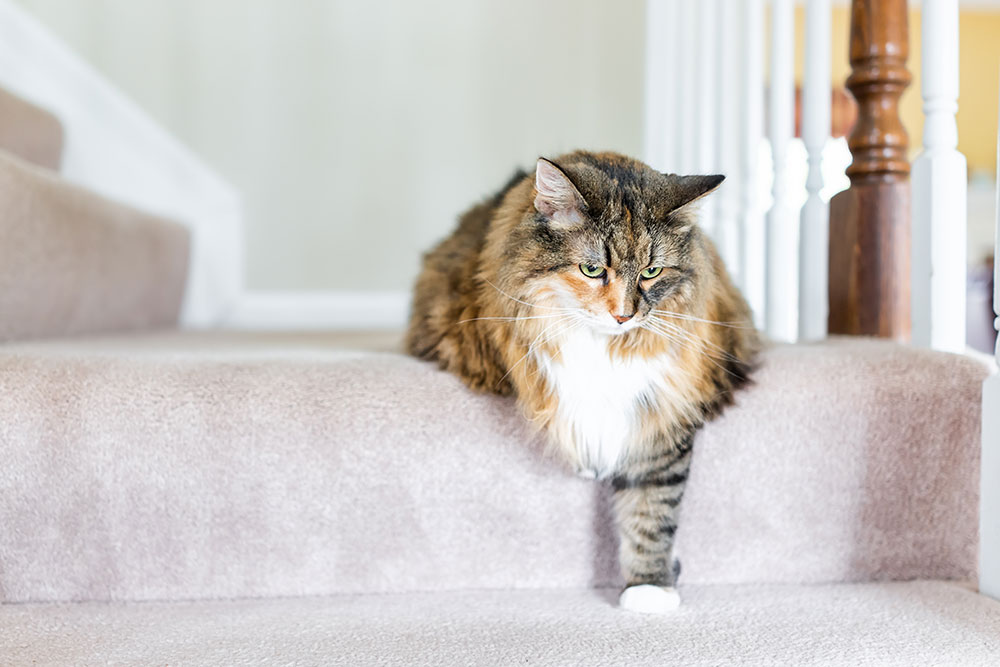
Small changes at home make the biggest daily difference for an arthritic cat. The home modifications for cats that pay off most are simple ones: a step up to a sunny windowsill, a litter tray with one low side to climb over, and warm, soft beds tucked away from draughts.
What happens between check-ups counts as much as the appointments themselves, and a steady, gentle routine keeps stiff joints moving without overdoing it.
- Keep movement gentle and regular: Short, frequent bouts of wand-toy play keep joints supple far better than one long session.
- Warm the sore spots: A heat pad on a low setting or a bed near a radiator soothes stiff joints, which matters through a damp Devon winter.
- Help with the grooming they can’t manage: A soft brush over the lower back and hips does the work an arthritic cat struggles to reach.
- Give sore legs grip: A runner or bath mat over laminate and tiles stops nervous slipping.
- Enrichment and gentle stretches: Puzzle feeders keep a less mobile cat mentally busy, and slow range-of-motion movements we can show you help maintain flexibility.
- Keep a simple log: Jotting down what your cat can and can’t do week to week tells us quickly whether the plan is working.
Frequently Asked Questions About Arthritis in Cats
When Should We Start Treating Arthritis in a Cat?
Treatment should start as soon as the early signs appear, not once your cat is visibly struggling. Because the joints keep changing whether or not the pain is managed, cats who begin treatment early tend to hold their mobility and muscle for longer. A hesitation at a familiar jump is reason enough to book a check rather than wait and see.
Can Cats Be Given Anti-Inflammatory Painkillers for Arthritis?
Cats can be given anti-inflammatory painkillers in some situations, but they need real care. They’re far more sensitive to these drugs than dogs are, so most aren’t suitable for long-term use, and none should ever come from the human medicine cabinet, where common painkillers can be fatal to a cat. When an NSAID is appropriate, we choose a cat-licensed option at the lowest effective dose and keep an eye on kidney and liver function with regular bloodwork.
How Much Weight Does My Cat Actually Need to Lose to Help?
Most cats need to lose far less weight than their families expect. Even a small, steady loss can noticeably ease the load on sore joints and sometimes lower how much pain relief a cat needs. Pace matters more than the size of the target, because cats who lose weight too fast can develop a serious liver problem, so we’ll set a safe goal for your cat’s frame and check in along the way.
Helping Your Cat Move Comfortably Into Older Age
Feline arthritis is a lifelong condition, but it’s also one of the most actively managed problems in cat medicine. Early diagnosis, medication chosen around your cat’s organ health, gentle rehabilitation, a sensible weight, and a few thoughtful changes at home add up to comfortable, contented senior years. If your cat has started hesitating at the windowsill or slowing on the stairs, that’s exactly what we’re here for at The Vale, so book in at your nearest Vale centre and we’ll take a proper look.




Leave A Comment