
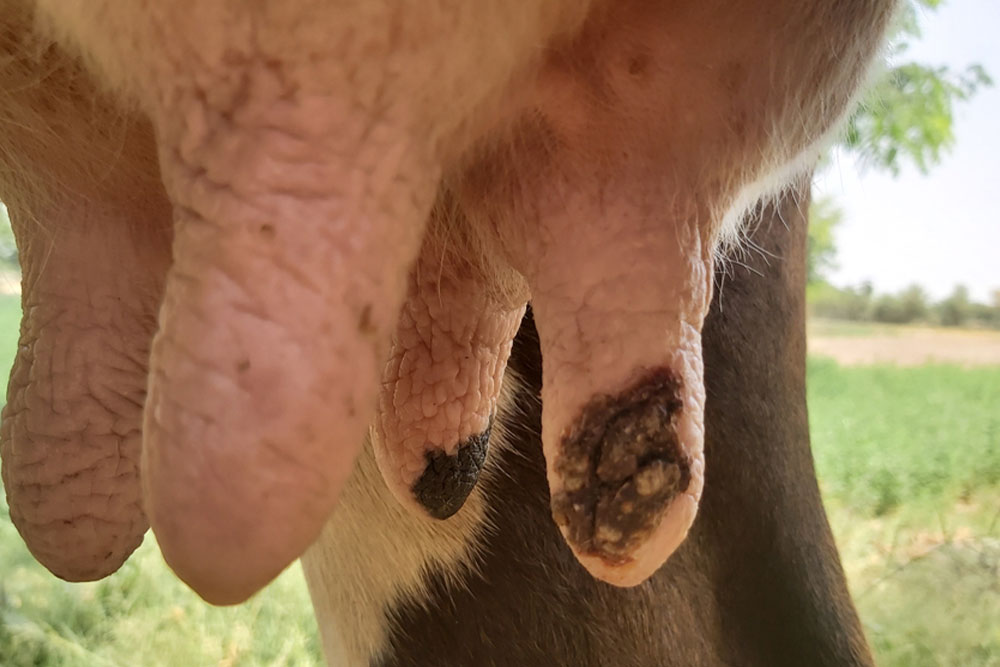
Rising somatic cell counts and repeat mastitis cases almost always trace back to the same root: udder infection spreading faster than your routine can clear it. Sometimes the source is environmental bacteria in the bedding, sometimes a milking machine in need of attention, and sometimes a few chronically infected cows quietly seeding the rest of the herd. On a small dairy, even two or three high-cell-count animals can push your milk over the buyer’s threshold and start costing you money. Udder health responds well to a targeted plan, once you know which bacteria you are dealing with and where in the routine the infection is getting in.
The Vale Veterinary Group runs proactive herd health visits for small dairies across Devon and Somerset, and our mastitis consultancy for dairy herds is built for exactly this: pinpointing where infection is getting in, training your staff to take clean milk samples, and setting lactation and dry cow treatment protocols around your own cows. We look at your milking routine, your plant, and your cell count trends alongside the culture results, because the answer is rarely in only one of them. If your counts are creeping up or mastitis keeps returning, get in touch and we will build a plan around your herd.
The Short Version on Somatic Cell Counts
- Most mastitis is either environmental, from bedding and stalls, or contagious, spread cow to cow at milking, and telling the two apart changes what you fix first.
- Milk culture identifies the bacteria behind your cases, and an antibiogram shows which antibiotic will actually work, so treatment stays targeted instead of blanket.
- Somatic cell count (SCC) is your early-warning system, and the California Mastitis Test narrows a high count down to the individual quarter at the cow side.
- Selective dry cow therapy needs cell count data behind it, because the decision to leave a cow untubed has to be justified rather than assumed.
What Is Mastitis, and Why Does One Infected Cow Hit a Small Dairy So Hard?
Mastitis in cows is inflammation of the udder driven most often by bacterial infection, and it takes two forms: clinical cases with visible changes in the milk or udder, and subclinical cases that quietly push up somatic cell counts with no outward sign.
On a small dairy the maths is unforgiving. With only 30 or 40 cows, each animal pours a larger share into the bulk tank, and subclinical cases cost more over a year than the clinical ones you can see.
| Feature | Clinical mastitis | Subclinical mastitis |
| Visible signs | Clots, watery or discoloured milk, a hot or swollen quarter | None you can see |
| How it’s found | At the parlour, by forestripping or by eye | Cell count testing and the California Mastitis Test |
| Effect on the tank | Milk withheld or discarded | Steadily raises bulk tank SCC |
What Is the Best Way to Control Environmental Mastitis During Lactation?
Environmental mastitis control is about the cow’s surroundings rather than the parlour: these infections come from bedding and stalls instead of passing cow to cow, so dry, clean resting areas are your first line of defence.
The usual culprits, E. coli, Streptococcus uberis, and Klebsiella, thrive in warm, damp bedding and muck. Keeping cubicles topped up, scraping passageways often, and grooming beds twice a day cuts how many bacteria reach the teat end between milkings. On our on-farm herd health visits we walk the shed with you and troubleshoot what we find.
Why Do Counts Climb at Certain Times of Year?
Mastitis risk through winter housing climbs for four linked reasons: more time indoors, higher stocking density, weaker ventilation, and bedding dampened by condensation. Each one nudges more environmental bacteria toward the teat. Bed deep, open the shed for airflow without creating a draught at cow level, and resist squeezing in a few extra head over winter, since overcrowding shortens lying time and fouls beds faster.
Summer works differently but lands in the same place. Heat stress suppresses immune function, and even in a Devon summer a run of warm, muggy days knocks a herd’s immunity while cows crowd into shade and lie in dirtier spots. Shade over the collecting yard and feeding at the cooler ends of the day both help, and because intake props up the immune system, our dairy herd services look at feeding as well as milking when counts climb.
What Does a Good Milking Parlour Routine Look Like?
A good parlour routine runs the same way every time, on every cow, in the same order. Timing matters; don’t rush it. Done properly it stops the parlour becoming the place infection spreads, and the sequence itself is short enough to write on the wall:
- Prepare the cow by cleaning off visible dirt and debris, and give teats a 10-20 seconds of stimulation for milk let-down before anything else. That timing can include the forestripping step.
- Forestrip every quarter to check for clots or abnormal milk before the unit goes near her. Don’t strip into your hand to avoid contamination; use a dark colored strip cup so you can see any clots, flakes, or off-color.
- Pre-dip and dry each teat. A pre-milking disinfectant that sits for thirty seconds targets environmental bacteria sitting on the teat skin, and a simple paper towel test to check for full coverage is worth the time. Drying is the step most often rushed, because a wet teat carries bacteria straight up the liner.
- Attach the unit with 1-2 minutes lag after prep, so the cow has let her milk down and clusters milk out cleanly.
- Remove the unit as soon as she has milked out, since overmilking damages teat ends.
- Post-dip every teat, without exception.
- Keep the cows standing for 30 minutes. It takes roughly 30 minutes for the post-dip to dry and for the teat sphincter muscle to close up. If they lay down before it closes, the risk for bacteria to enter the teat rises. Push up feed or put out new feed after milking to keep them standing.
The two dips do different jobs, which is worth knowing if you are only doing one. Pre-dipping is aimed at environmental bugs on the teat before the unit goes on. Post-dipping is your defence against contagious bugs passing cow to cow on the liners, and it only works if it covers the whole teat every time. Wear gloves, and use single-use cloths for wiping teats. Our mastitis troubleshooting visits include training your team on one shared protocol, because a routine that changes depending on who is milking is not a routine.
What If the Pattern Points to Contagious Spread?
Contagious pathogens live in infected udders and travel cow to cow on liners, hands, and cloths, so the fix looks nothing like a bedding problem. Staphylococcus aureus is the common one and cures poorly, which is why prevention beats treatment. Streptococcus agalactiae is much less common in the UK now, but it is worth naming because it lives only in the udder and can genuinely be eradicated from a herd. Mycoplasma is rare here and does not respond to antibiotics at all, so it changes the whole plan if it turns up.
Milking order is your main control. Known infected cows milk last, or through a separate cluster, so a clean cow never follows an infected one through the same liner. That only works if you know who is infected, which is why testing is so important. Bulk tank culture is usually the cheapest first screen for all three of these, and it is worth running before you start sampling every cow individually.
Could the Milking Machine Be Behind It?
A machine that has drifted out of adjustment can undo an otherwise good parlour routine, and it’s the cause most often overlooked, because nothing about it looks wrong from the pit. Vacuum that runs too high, pulsation that has slipped, liners kept past their change interval, and units left on after a cow has milked out all damage teat ends and open the door to infection.
Teat condition is the tell. Rings at the teat end, roughened or cracked skin, and teats that stay swollen or discoloured after the unit comes off point at the machine rather than the bedding. Liners have a working life, commonly around 2,500 milkings for rubber, though silicone runs considerably longer, so check the figure for what you actually have fitted. A full static and dynamic plant test is worth booking at least annually, and sooner if counts climb with no other explanation.
Why Is the Dry Period So Important for Udder Health?
Dry cow management matters because the dry period is two things at once: a window when new infections take hold, and the best chance you get to cure the ones already there.
That risk is not spread evenly. New infections concentrate in the first two to three weeks after drying off, before the keratin plug has sealed the teat canal, and again in the fortnight before calving as the plug softens. Those two windows are where the management effort belongs, and the fortnight around calving is also when fresh cases show, so our farm vets keep an eye on cows through it.
Selective dry cow therapy is now the expectation rather than the exception, and doing it properly means having a threshold rather than a hunch. The usual starting point is an individual cow SCC under 200,000 across the last three recordings, with no clinical case that lactation. That figure shifts with a herd’s overall infection level, so it is set for your farm rather than lifted from a leaflet, and it only works if you have the recording data to stand behind it.
Cows that clear those criteria get an internal teat sealant on its own, which works well but raises the stakes on technique, because there is no antibiotic alongside it to cover anything pushed up the canal during infusion. Sealant-associated E. coli and Klebsiella cases are a recognised consequence of rushed work, so gloves, a properly scrubbed teat end, and a clean dry cow are not optional extras.
How Do You Prevent Mastitis in Heifers Before Their First Lactation?
Preventing mastitis in heifers starts long before her first lactation, and it hinges on clean dry bedding, steady fly control, and stopping calves from cross-suckling one another. Get those three right and most heifers calve in with clean, healthy quarters.
Flies deserve more attention than they usually get. Summer mastitis, often caused by Trueperella pyogenes, is carried by flies to the teats of dry cows and unbred heifers, and it can scar a quarter for life. Clean calving paddocks and a check of every heifer’s udder at calving pay off too.
Vaccination has a place alongside all of this. Startvac covers coliforms and staphylococci, Ubac targets Strep uberis, and both work as adjuncts that reduce the number and severity of cases rather than as replacements for hygiene and routine. Our farm services keep replacements on track from weaning through to first calving, and we’ll tell you honestly whether a vaccine is likely to earn its keep in your herd.
How Do Somatic Cell Counts Tell You What Is Happening in the Udder?
Somatic cell count measures the immune cells in milk, so it doubles as a direct readout of udder health: low and steady means healthy quarters, while a rising figure, whether on one cow or the bulk tank, flags infection you often can’t see yet.
| Bulk tank SCC (cells/mL) | What it usually means |
| Under 200,000 | Good udder health, typically within premium range |
| 200,000 to 400,000 | Subclinical infection building, penalties likely near the top of the band |
| Over 400,000 | Above the legal limit for milk sold for human consumption, and milk may be rejected |
That 400,000 figure is not simply a buyer preference. It is the legal maximum, assessed on a rolling geometric mean, which is why a herd sitting in the high 300,000s has less headroom than the number suggests: one bad month can tip the average.
Individual cow SCC, from milk recording, finds the specific animals driving your average, so you can decide whether to treat, dry off early, or cull. Bulk tank SCC tracks the whole herd and is the figure your buyer sees. Reading them over months, rather than as single snapshots, shows whether a plan is working. Regular dairy herd health monitoring lets us set realistic targets with you and follow the trend.
How Does the California Mastitis Test Find Hidden Cases?
The California Mastitis Test finds subclinical infection at the cow side in under a minute, with no lab and no waiting. Equal parts milk and reagent go into a four-well paddle, one well per quarter, and a swirl of the wrist tells you the answer: milk from a healthy quarter stays runny, while milk carrying a high cell count thickens into a gel.
It earns its place alongside milk recording because it works quarter by quarter. Recording gives one composite figure per cow, which tells you she has a problem but not where it sits. The California Mastitis Test narrows that down, which is what you need before you sample for culture or decide whether to treat. It’s most useful at a few specific moments:
- At drying off, to decide which cows and quarters need an antibiotic tube under a selective policy.
- On fresh cows, where a quarter can be infected well before anything shows in the milk.
- When the bulk tank climbs unexpectedly, as a fast way to screen the herd before the next recording.
- Before taking a sterile sample, so the milk going for culture comes from the quarter that is actually infected.
A faint reaction, scored as a trace, suggests a count around 200,000 to 400,000, and the gel thickens as counts climb into the millions. The limits are worth knowing: the scoring is a judgement call rather than a number, it is unreliable in the first few days after calving and at the very end of lactation, and it tells you nothing about which organism is involved. We’re happy to run through the technique with whoever is milking, so the scores mean the same thing every time.
How Do You Get to the Root of a Recurring Mastitis Problem?
Solving mastitis problems for good means tracking infection rates, identifying which pathogens are present, and pinpointing when and where new cases appear. Patterns, not one-off cases, point you to where the trouble lives.
The practical starting point costs nothing. The free Mastitis Pattern Analysis Tool takes the records you already keep and tells you whether your herd’s pattern is environmental during lactation, environmental over the dry period, or contagious. That one answer decides where the effort goes before you spend anything.
From there, our on-farm milk culture service sorts cases into broad groups, Gram-positive, Gram-negative, or no growth, so you know whether an antibiotic is even likely to help. Samples sent to our laboratory for full milk bacteriology name the exact organism and can be paired with an antibiogram showing what it is genuinely sensitive to. Results come back within 48 hours, and we handle samples from across the UK and Ireland.
Culture answers whether an antibiotic will help and which one, and two further principles belong in every clinical case. First, an anti-inflammatory is standard practice for every case, because it improves comfort, appetite, and cure rates rather than simply masking pain and reduces the inflammation from bacterial endotoxins. Second, first-line treatment should use the narrowest-spectrum product that will do the job, keeping fluoroquinolones and third and fourth generation cephalosporins in reserve. Both are good medicine and both are what farm assurance expects to see behind your treatment records.
Where a herd needs the full structure, we can put a Mastitis Control Plan in place on the recognised national framework rather than a set of loose recommendations.
Frequently Asked Questions About Milk Quality and Udder Health
Can I treat mild mastitis myself, or should the vet see every case?
Many mild clinical cases can be handled on the farm under an agreed herd health plan. What warrants a call is anything that doesn’t respond to the first course, a cow that keeps flaring in the same quarter, or a case with a hot, hard udder in an animal that’s off her feed. A MastDecide culture kit tells you whether an antibiotic will help, and we can set protocols so you know when to treat and when to ring us.
What should I do the moment I spot clinical mastitis?
Strip the affected quarter out fully and keep her milk out of the tank. Check her over for signs she’s unwell beyond the udder, meaning dullness, a poor appetite, or a raised temperature. Start treatment according to your plan, including pain relief, and mark her clearly so the wrong milk is never collected. Bear in mind that off-label use or a repeat course can extend the withdrawal well beyond the label figure, so test before her milk goes back into the bulk tank. A cow that goes flat, cold, or toxic is an emergency rather than a wait-and-see, so ring us straight away.
Does a high bulk tank cell count always mean the whole herd is infected?
Not usually. Very often a handful of chronically infected cows, sometimes just two or three, carry enough high-count milk to lift the whole tank, and finding and managing them brings the average down quickly. Sometimes the driver is herd-wide instead: a hygiene gap in the parlour, wet bedding, or a routine that’s slipped. Individual cow counts backed by culture are what tell the two situations apart.
When is a chronically infected cow no longer worth treating?
There comes a point where repeat treatment costs more in discarded milk and drug than the cow returns. Three or more clinical cases in a lactation, a persistently high individual count across several recordings, or a Staph aureus infection that has survived a proper course all point that way. Cure rates in older cows and chronic quarters are often poor enough that many farms don’t attempt a second lactation. Dry-period cure rates are usually better than lactation-period rates, which factors into the decisions too. Drying off the affected quarter or culling are both reasonable calls, and the cell count and culture data make it a practical conversation rather than a guess.
Building Udder Health That Lasts on Your Dairy
Strong udder health is rarely one silver bullet, just a handful of ordinary things done consistently: clean dry heifers, tidy beds, a plant that’s set up correctly, a steady parlour routine, a dry cow plan with a threshold behind it, and cell count data you actually look at.
A plan built around a 200-cow herd rarely suits a 40-cow one, so the details need to fit your sheds, your parlour, and your own figures. Book a herd health visit and our farm vets at The Vale will work through all of it with you.







Leave A Comment