
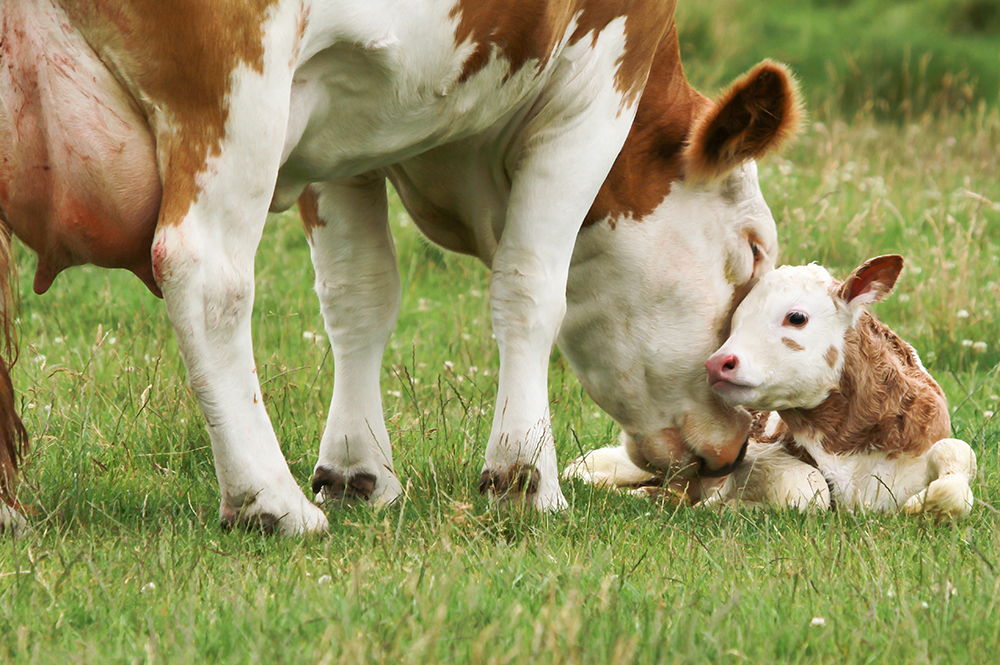
Scours costs producers calves, time, and money every calving season, and it is one of the few problems on the farm where a clear plan genuinely changes the outcome. The frustrating part is that scours is not really one disease. It is a clinical picture caused by rotavirus, coronavirus, cryptosporidium, and E. coli, often working in combination, and how bad an outbreak gets depends on two things: how much of the bug is in the environment, and how good a start each calf got at birth. Getting ahead of it means thinking about cow nutrition, calving area cleanliness, colostrum, and vaccine timing as one connected system. For producers already working through cases, knowing how to judge dehydration and tell the difference between a calf that needs oral electrolytes and one that needs IV fluids can be the difference between pulling a calf through and losing it.
At The Vale Veterinary Group, our farm vets work across Devon with beef and dairy producers on the kind of planning that takes pressure off the calving season before it starts. Our farm animal services include herd health planning, vaccination advice, and on-farm support when an outbreak is already running. Whether you are planning ahead or dealing with calves now, get in touch with us and we can work through a plan with you.
Calf Scours: The Big Picture
- Scours is a syndrome, not one disease: several bugs cause it, and mixed infections are common.
- Colostrum is your biggest lever: getting enough quality colostrum into a calf in the first few hours prevents most cases.
- Dehydration is what kills, not the bug itself: calves die from fluid loss and the acid build-up that follows.
- Most calves recover with oral electrolytes: a calf that is down, weak, or has lost the suckle reflex needs IV fluids and a vet call.
What Causes Calf Scours?
Scours has different drivers at different ages, and knowing which age you are dealing with helps narrow down the cause:
- 0 to 5 days: mostly E. coli, occasionally other bacteria
- 5 to 21 days: rotavirus, coronavirus, cryptosporidium, and salmonella
- Over 21 days: coccidia, salmonella, and continuing cryptosporidium
The mix of bugs is a bit different between beef calf scours and dairy calf scours, so the prevention plan needs to match the system. Mixed infections are common, so finding cryptosporidium in a sample does not mean rotavirus is not also at work. It is worth knowing which bugs are present because cryptosporidium can also infect people (so anyone handling sick calves needs to be careful with hygiene), treatment varies between bacterial, viral, and protozoal causes, and the prevention strategy depends on what you are trying to keep out.
There is also the wider picture of farm pressure. Overfeeding milk replacer, dirty equipment, wet calving areas, and poor colostrum transfer all lower the bug-dose a calf needs before they get sick. So even if you cannot eliminate the bugs from the environment, you can change the conditions that let them take hold. The cumulative impact of disease on calf health makes the case that scours is more about overall pressure than any single pathogen.
What Raises the Risk of Scours in Your Herd?
Outbreaks usually reflect the build-up of several stresses on the newborn calf rather than one thing going wrong. The big risk factors:
- Not enough colostrum, which is the single biggest risk factor and the cause of failure of passive transfer.
- Overcrowding or mixing age groups, which piles bug-exposure onto the youngest calves.
- Dirty or wet calving areas, where pathogens build up over the season in repeatedly used ground.
- Cold, wet weather, which knocks calf immunity and helps bugs survive.
- Poor cow nutrition late in pregnancy, where shortfalls in trace minerals affect colostrum quality and calf vigour.
- Dirty feeding equipment, which carries bugs straight to the gut if not properly cleaned.
- All cows calving in the same area, where bug numbers climb steadily as the season goes on.
The pattern of when cases hit tells you something. Outbreaks toward the end of the calving season often mean environmental build-up. Early outbreaks usually point to colostrum problems or bugs carried over from last year.
Why Does Colostrum Matter So Much?
Getting enough quality colostrum into a calf within the first few hours of life is the single most important thing you can do for calf health and scours prevention. Colostrum gives the calf passive antibodies, energy, and growth factors at exactly the moment they need them, and the gut can only absorb those antibodies for a few hours before the window closes.
A useful way to remember what good colostrum management looks like is the “4 Qs,” which the research on colostrum and calf productivity backs up:
- Quantity: 10% of body weight in the first feeding (so 4 to 5 litres for a Holstein calf), within 2 hours of birth, then again within 12 hours.
- Quality: check it with a Brix refractometer, where a reading above 22% means the colostrum is good.
- Quickness: the calf’s gut absorbs antibodies well only for a few hours after birth, and that ability is essentially gone by 24 hours.
- sQueaky clean: dirty colostrum or dirty equipment cuts down antibody absorption and adds pathogens directly into the calf.
If you want to know whether your colostrum programme is actually working, ask your vet to run serum total protein on a few calves between 1 and 7 days old. Calves below 5.5 g/dL did not get enough antibodies, and those are the ones most at risk for scours later.
What Vaccinations Help Reduce Scours?
Two approaches reduce scours pressure through vaccination. The more common and cost-effective one is pre-calving dam vaccination: vaccinating cows 4 to 6 weeks before calving boosts the antibody levels in their colostrum, so the calf gets stronger protection at birth. These vaccines usually cover rotavirus, coronavirus, and E. coli. Direct calf vaccination is available for certain bugs and used in specific situations, but it is less common than dam vaccination.
A key point: vaccinating the cow only helps if the calf actually gets enough good-quality colostrum to benefit from those antibodies. Vaccination cannot fix a colostrum problem.
The right programme depends on which bugs you have had in past outbreaks, what is common in your area, your herd’s overall health status, how you calve, and what makes sense for the numbers. We are happy to sit down and work that out with you, and we fold it into our dairy services and beef services herd health planning.
How Does the Calving Environment Affect Scours?
The number of bugs a calf has to fight off shapes whether they get sick, and the calving environment is one of the most underused tools producers have for keeping that number down. The practices that make the biggest difference:
- Clean, dry bedding changed often, because wet bedding is where pathogens build up.
- Separating calving areas from sick calf housing, so healthy calves are not following sick ones through the same space.
- Moving cow and calf out promptly, within 24 hours of birth where possible, to break the cycle of build-up.
- The Sandhills Calving System, where cows that have calved move on to fresh ground so the newest calves are always born onto clean pasture.
- Cleaning feeding equipment thoroughly between uses, since the same buckets and tubes carry bugs from sick calves to healthy ones if they are just rinsed.
Even modest investment in calving area design often pays back in fewer losses within a single season.
How Does Nutrition Affect Scours Risk?
Several nutritional pieces shape whether calves get sick.
For the cow:
- Body condition at calving matters. Cows in good condition produce better colostrum and have more vigorous calves.
- Trace minerals and vitamins in late pregnancy (selenium, copper, vitamin E, vitamin A) affect colostrum quality and the calf’s immune system. Forage analysis followed by targeted supplementation usually gets better results than blanket supplementation.
For the calf:
- When you are feeding young calves, consistency matters. Same volumes, same intervals, same temperature, same mix. Cold milk, inconsistent timing, or poor mixing all cause digestive upset that looks just like infectious scours.
Nutrition is often the missing piece on farms that have already sorted out vaccines and hygiene but are still seeing scours.
How Do You Tell How Bad a Case Is?
Spotting that a calf has scours is the easy part. Working out how serious it is, right there at the pen-side, is what decides treatment. The most useful things to check are how the calf is acting, whether they will still suckle, their temperature, and how dehydrated they look. Dehydration shows up in a few familiar ways: the eye sinks back in the socket, the skin pinch over the eyelid or shoulder takes longer to flatten out, and the gums get sticky rather than slick.
The table below sorts severity and what to do:
| Dehydration | What you’ll see | What to do |
| Under 5% | Bright, active calf, eye still full | Oral electrolytes |
| 5 to 8% | Calf is down in attitude but still standing, eye slightly sunken, skin pinch slow | Oral electrolytes, watch closely |
| 8 to 10% | Calf is down or barely standing, eye clearly sunken, skin pinch takes a while to flatten | Time to ring us for IV fluids |
| Over 10% | Calf is flat out, cold to touch on the ears and feet, weak or no suckle | Ring us straight away, situation is critical |
A calf that is weak, will not stand, or has lost the suckle reflex is in trouble no matter how long they have been scouring, so do not wait.
How Do Oral Electrolytes Work?
What actually kills a scouring calf is dehydration, the loss of electrolytes, and the acid build-up in the blood that follows. A good electrolyte product addresses all three: sodium to pull water back into the calf, glucose or acetate for energy and to help that sodium absorb properly, alkalinising agents to fix the acid build-up, and potassium to replace what has been lost.
For how much and how often, give 2 to 3 litres per feeding, two to four times a day depending on how dehydrated the calf is, and keep it up for at least 2 to 3 days. Space electrolyte feedings 2 to 4 hours from milk feedings.
One important update from older advice: keep the calf on milk alongside the electrolytes (with that 2 to 4 hour gap). The old guidance to pull milk has not held up under proper study. Withholding milk delays recovery and starves the calf of the energy they need to fight off the bugs.
When Does a Calf Need IV Fluids?
Some calves cannot get back from scours on oral electrolytes alone, and these are the ones to ring us about straight away:
- The calf cannot stand
- The calf has lost the suckle reflex
- The eyes are clearly sunken
- Ears and feet are cold to touch
- The calf is unresponsive or barely aware
- The calf has not improved after 24 to 48 hours of proper oral treatment
IV fluids correct dehydration and the acid build-up much faster than oral electrolytes can in a really sick calf, and waiting on these cases costs lives. A calf in moderate-to-severe shock needs IV access promptly.
On antibiotics: it is more complicated than “scouring calf gets antibiotics.” Antibiotics are appropriate when there is a clear sign of bacterial infection, such as fever, systemic illness, or blood in the faeces. But most scours is actually viral or protozoal, and antibiotics will not help in those cases. Worse, indiscriminate antibiotic use feeds antimicrobial resistance and some antibiotics can actually make scours worse by disrupting the gut. Picking the right antibiotic should be guided by the clinical signs, the suspected pathogen, and ideally culture and sensitivity results. We are happy to talk it through. Ring us for any calf that is down, cold, or not responding to oral treatment.

How Do You Handle an Outbreak?
When cases start clustering, either close together in time or in one area, it is time to step beyond treating individual calves:
- Work out which bug is likely by looking at the age of the calves affected, since the age tells you a lot about which agents are in play.
- Look at the calving area, including when affected calves moved through and whether anything changed with bedding, hygiene, or cow movement.
- Send samples from sick calves who have not yet been treated, since faecal samples are most accurate before any treatment has started.
- Check your colostrum programme by running serum total protein on calves born recently.
- Put short-term fixes in place: move cows still to calve onto clean ground, intensify bedding management, and isolate sick calves from healthy ones.
- Plan for next year, since outbreaks usually expose system problems that need fixing before the next calving season.
Our herd investigation services coordinate sample collection, on-farm troubleshooting, and outbreak response, and our dairy services and beef services include the ongoing planning that keeps you from repeating the same outbreak next season.
Frequently Asked Questions About Calf Scours
Do I Need to Know Which Bug Is Causing the Scours to Treat Individual Calves?
Not usually for treating each calf, because the basics (electrolytes, hydration, careful monitoring) are similar across causes. But knowing the bug really matters for herd-level prevention and for handling an outbreak, so a faecal sample early on is one of the best diagnostic investments a producer can make.
Should I Take a Scouring Calf off Milk?
No, generally not. Current evidence says to keep the calf on milk alongside the electrolytes, with 2 to 4 hours between feedings of each. Pulling milk delays recovery and leaves the calf without the energy they need. The old advice has not held up under proper testing.
How Do I Know if My Colostrum Programme Is Actually Working?
Have us run serum total protein on a few calves between 1 and 7 days old. Calves under 5.5 g/dL did not get enough antibodies, and calves above that level got a decent start. A handful of samples each calving season tells you exactly where you stand.
My Vaccinations Are in Place but I’m Still Seeing Scours. What Now?
Look at the other layers: colostrum management, calving area cleanliness, and milk feeding consistency in dairy systems. Vaccines are one tool in a system that needs every layer working together. A herd visit can identify which layer is the weakest link in your particular setup.
One of My Calves Just Started Scouring. Do I Ring You Now or Wait?
If the calf is still bright, standing, and taking electrolytes, you can usually start treatment yourself and watch them. Ring us straight away if the calf is down, will not get up, has lost the suckle reflex, or has cold ears and feet. When you are not sure, ring us. We would rather hear about a borderline calf early than a critical one too late.
Building a Scours Prevention Plan for Your Farm
Preventing scours is achievable if you stay consistent on colostrum management, vaccination timing, sanitation, and nutrition, and treating cases early makes a real difference when they do happen. The best results come from planning ahead with a vet who knows your specific farm, the bugs you have dealt with before, and how you calve.
If you are planning ahead for the next calving period or working through cases now, get in touch with us and our farm team will work through a plan with you.





Leave A Comment