
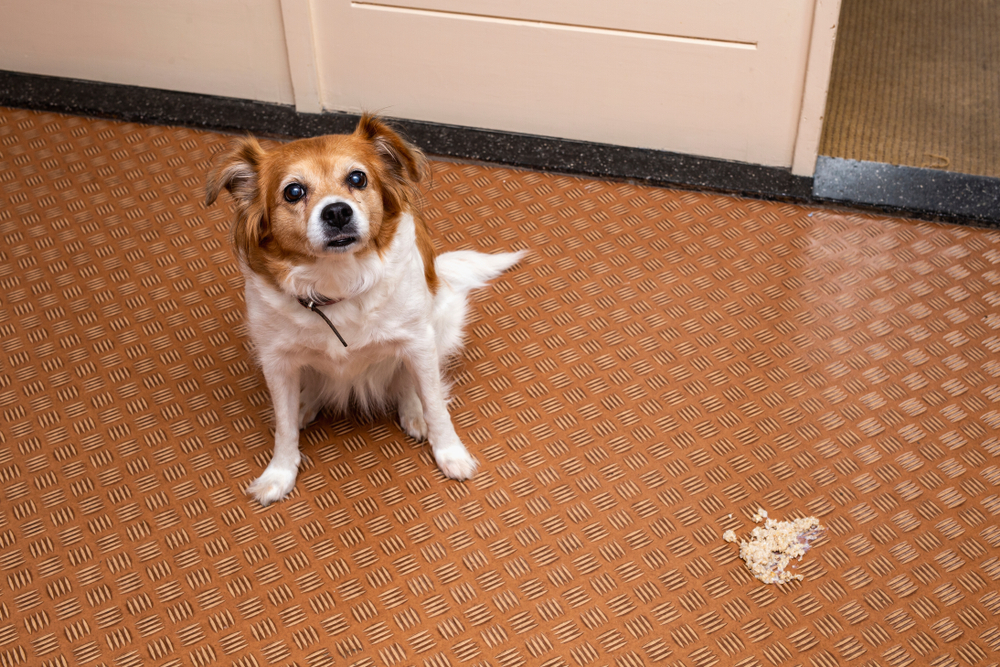
Chronic Vomiting in Dogs and Cats: Getting to the Bottom of It
The occasional bout of sickness in a dog or cat is usually nothing to worry about. A bit of grass on a morning walk, a meal taken too quickly, an upset stomach after a treat that did not agree with them; these things happen to the healthiest of pets and resolve on their own. But when your pet is being sick several times a week, bringing up food regularly after meals, or losing weight alongside the vomiting, something more than a sensitive stomach is usually at play. Chronic vomiting (vomiting that continues beyond two to three weeks or keeps returning after periods of normality) can point to a food allergy, organ disease, an inflammatory disorder within the gut, or stress-related problems that mimic medical illness on the surface.
The reassuring news is that chronic vomiting is one of the more diagnosable presentations we see in general practice when worked up properly. The trick is identifying the cause rather than treating the vomiting on its own. At The Vale Veterinary Group, our in-house laboratory allows us to run blood panels, urinalysis, and other baseline tests quickly, often on the same day as your pet’s consultation. When the initial workup points towards a condition that needs further investigation, we have the imaging, endoscopy, and surgical capabilities to keep moving forward. Contact us at any of our Devon surgeries to book an appointment if your pet’s vomiting has become a recurring pattern.
Vomiting vs. Regurgitation: An Important Distinction
Vomiting and regurgitation are not the same thing, and the difference matters for diagnosis. Vomiting is active: the pet retches, the abdomen contracts, and partially digested food (often with bile) comes up. Regurgitation is passive: the pet simply lowers their head and undigested food slides out, sometimes still in the shape of the kibble, with no warning and no abdominal effort.
Vomiting points towards stomach, intestinal, or systemic disease. Regurgitation points towards the oesophagus or swallowing mechanism, including conditions like megaesophagus. Mixing them up can send an investigation in the wrong direction.
When Vomiting in Pets Becomes Concerning
What the Appearance and Frequency Can Tell You
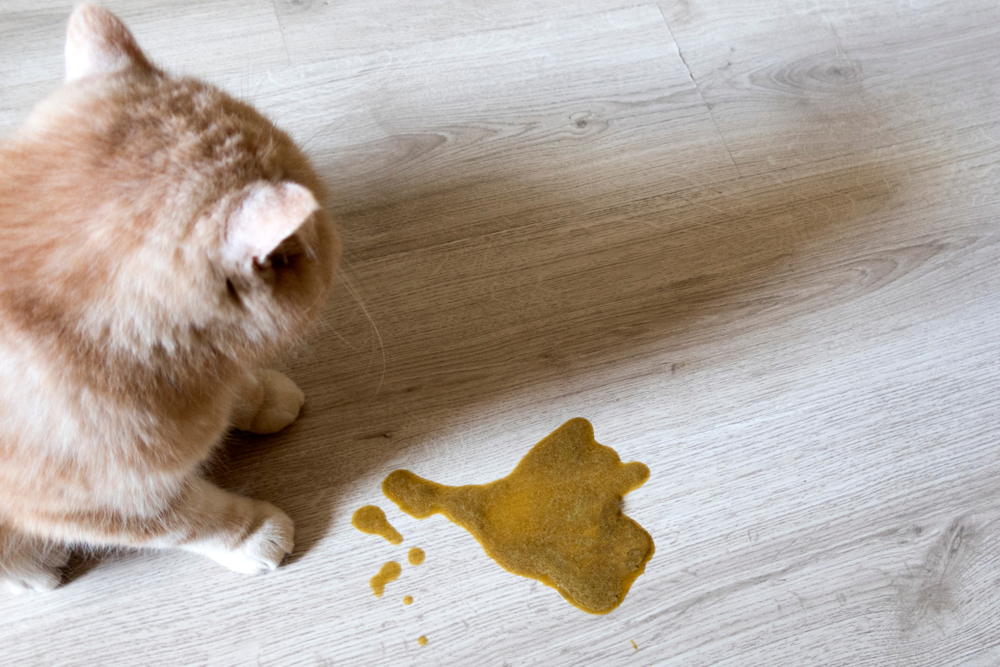
What comes up and how often provides genuinely useful clinical information before any testing has begun. Note timing, frequency, and what the vomit looks like. Photos and short video clips, awkward as they feel to take in the moment, regularly provide information that history alone cannot replicate.
The appearance of vomit often offers the first clue:
| What you see | What it may suggest |
| Yellow or green bile | Empty stomach (bilious vomiting syndrome) or vomiting that has continued past the food stage |
| Undigested food, barely chewed | Eating too quickly, or possible regurgitation |
| Dark, coffee-ground material | Digested blood; same-day call |
| Bright red blood | Active bleeding from mouth, oesophagus, or stomach; same-day call |
| Foamy white liquid | Empty stomach producing mucus and saliva; nausea, reflux, or hairball-related |
| Sausage-shaped tube of fur | Hairball, particularly in long-haired cats |
When a Vomiting Pet Needs an Evaluation
Some patterns clearly call for an assessment rather than continued home monitoring:
- Vomiting twice or more per week for more than two weeks
- More than one to two hairballs per month in cats, or any in cats with short coats
- Unexplained weight loss alongside the vomiting
- Increased thirst or urination as a new pattern
- Reduced energy, concurrent diarrhoea, or vomiting that follows specific foods
Older pets warrant particular attention. In dogs and cats over seven, senior pet health conditions including kidney disease, liver disease, and hyperthyroidism often first present as chronic sickness before any other signs emerge. Our routine healthcare services include senior screening that catches these conditions in their earlier, far more manageable stages.
When Vomiting Is an Emergency
Some patterns should not wait for an appointment slot. Contact us same-day or seek out-of-hours care for:
- Vomiting bloodin any form
- Abdominal distension or pain:hunching, guarding, unwillingness to lie down or move
- Repeated unproductive retching,particularly in deep-chested breeds (this can indicate gastric dilatation-volvulus, a true emergency)
- Inability to keep water downfor more than 12 hours
- Pronounced lethargyalongside the vomiting
- Vomiting in very young or very old petscombined with any other concerning sign
For situations outside our open hours, our website outlines the out-of-hours emergency services available to clients.
What Causes Chronic Vomiting in Dogs and Cats?
Food, Diet, and Dietary Indiscretion
Food is one of the most common contributors to chronic vomiting and one of the last things many families think to question. True dietary allergy is an immune response to a specific protein (chicken, beef, dairy, or fish are the usual offenders). Food intolerance is a non-immune reaction to additives, fat content, or specific ingredients. Both produce similar GI signs and both are confirmed through a strict diet trial. Pet food selection is rarely as simple as picking a “sensitive stomach” formula off the shelf, and dietary inconsistency (rotating brands, changing toppers, generous treats) can perpetuate symptoms by making the offending ingredient impossible to identify.
Pets who bolt their food often bring it back up looking barely chewed; this resolves with slow feeders. Scavenging on walks or raiding bins causes acute vomiting that resolves quickly, but Devon’s rural environment offers plenty of opportunity for repeat offenders, from windfall fruit and silage to livestock droppings.
Swallowed objects are a more frequent cause of chronic intermittent vomiting than families expect. Partial GI obstructions can produce intermittent symptoms over weeks rather than the dramatic acute presentation often pictured, especially with linear foreign bodies (string, ribbon) in cats. Our surgical services are equipped to handle obstructions when surgery is the answer.
Systemic and Organ Disease
Vomiting is not always a stomach problem. Several systemic conditions trigger nausea and vomiting as secondary effects, and treating GI symptoms without addressing the underlying cause never produces lasting improvement.
- Chronic kidney disease: waste product build-up causes persistent nausea
- Liver diseaseand gall bladder disease: impaired bile processing disrupts digestion broadly
- Hyperthyroidismin cats: drives vomiting alongside weight loss and restlessness
- Pancreatitis: inflammation that can become chronic, particularly in certain breeds
- Diabetes mellitus and Addison’s disease: less common but worth ruling out
Primary GI Tract Disorders
Once systemic causes are ruled out, focus shifts to the gut itself:
- Inflammatory bowel disease (IBD): chronic immune-mediated intestinal inflammation; among the most common GI diagnoses in older cats
- Lymphoma: small-cell intestinal lymphoma mimics IBD so closely that full-thickness biopsy is needed to distinguish them
- Gastric ulcers: erosion of the stomach lining, often related to medication use or prolonged stress
- Bilious vomiting syndrome: bile in an empty stomach overnight produces predictable early-morning vomiting
- Pyloric stenosis: narrowing of the stomach outflow, congenital in young brachycephalic breeds or acquired in older pets
- Gastric cancer: less common but worth considering in older pets with progressive weight loss alongside vomiting
Eating Habits and Stress as Overlooked Causes
Fast Eating and the Scarf-and-Barf Pattern
Some pets eat so rapidly that food comes back up almost immediately, looking nearly undigested. The pattern is most common in multi-pet households where competition speeds up eating and in pets adopted from situations of food insecurity. The fix is structural: interactive feeders and slow-feeder bowls force the pet to work for each piece of food, feeding pets separately removes perceived competition, and offering smaller, more frequent meals achieves the same effect. The vomiting often resolves within days.
Stress and Anxiety as Contributors to GI Vomiting
Chronic stress is an underappreciated driver of GI symptoms, particularly in cats. Feline stress shows up routinely as vomiting, diarrhoea, or both, and looks identical to medically caused GI disease on examination. Common triggers include household routine disruptions, new pets or family members, building work, holiday boarding, and unresolved tension between cats sharing the same home. In dogs, stress and anxiety more often present as appetite changes or behavioural shifts, but vomiting can occur too. Stress-related vomiting often presents alongside hiding, overgrooming, or withdrawal. If your pet’s vomiting started around a specific change in the household, that timing matters at the consultation.
How the Diagnostic Workup Works
Our approach progresses from least invasive to most:
- Detailed history:timing, frequency, diet, recent changes, medications
- Physical examination:weight, abdominal palpation, body condition, hydration
- Bloodworkfull blood count and biochemistry for metabolic and organ causes, plus thyroid testing in older cats
- Urinalysiskidney concentrating ability and metabolic markers bloodwork alone cannot show
- Faecal testingparasites and GI pathogens
- Imaging:radiographs assess organ size and foreign material; ultrasound evaluates intestinal wall thickness and organ architecture in more detail
Our in-house laboratory returns results for many panels on the same day. Established wellness baselines are genuinely useful here: a creatinine value that has crept up over three years from a known starting point tells us something a single value on a sick pet cannot.
Elimination Diet Trials
When baseline diagnostics do not identify a cause, a structured diet trial is the next step for suspected dietary allergy or intolerance. Two approaches are available:
Novel protein diet: built around a protein the pet has never eaten before (kangaroo, venison, rabbit). The immune system cannot react to a protein it has never encountered. Requires a careful diet history.
Hydrolysed protein diet: prescription diet in which proteins have been broken down into pieces too small for the immune system to recognise. Often the better choice when diet history is uncertain.
The trial runs 8 to 12 weeks during which absolutely nothing else enters the pet’s mouth: no treats, flavoured medications, table scraps, or food sharing with other pets. The most common reason a diet trial “fails” is the chicken-flavoured worming tablet or the half a biscuit slipped over the garden fence. Over-the-counter “limited ingredient” foods are not appropriate for diagnostic trials due to manufacturing cross-contamination.
Endoscopy and Biopsy
Endoscopy as a Minimally Invasive Option
Endoscopy uses a flexible camera under general anaesthesia to directly visualise the oesophagus, stomach, and upper small intestine and collect tissue samples. Recovery is typically rapid, with most pets back to normal within 24 hours. We work with a network of specialists when referral for advanced endoscopy is the right step, and we coordinate that care closely with the family.
Exploratory Surgery and GI Biopsy
In some cases, exploratory surgery is the better choice. It allows direct examination of the abdominal organs and full-thickness GI biopsy samples from multiple locations simultaneously. Full-thickness tissue reveals conditions that surface endoscopic samples may miss, particularly in deeper layers of the intestinal wall. Surgery is appropriate when imaging has identified abnormalities needing direct examination, when full-thickness tissue is needed for accurate diagnosis (notably for distinguishing IBD from small-cell lymphoma), or when a blockage requires direct intervention.
What Biopsy Results Reveal
Distinguishing between IBD, intestinal lymphoma, other GI cancers, infections, and different inflammatory patterns depends on histopathology. The treatments differ entirely. Empirical treatment for “IBD” in a patient who actually has small-cell lymphoma delays the chemotherapy that would have made a meaningful difference. Accurate tissue diagnosis enables targeted therapy.
Treatment Approaches
Managing Food-Responsive Vomiting
When a diet trial resolves symptoms and reintroduction confirms food allergy or intolerance, management centres on staying on the diet that worked: consistent household rules about treats, planning ahead for holidays and travel, reading labels carefully when manufacturers reformulate, and coordinating with anyone else who feeds the pet.
IBD Management
IBD treatment combines anti-inflammatory or immunosuppressive medications with dietary adjustments. Some pets respond to dietary management alone or with low-dose medication; others need stronger immunosuppression. B12 supplementation is often part of the protocol because cats with chronic GI disease frequently develop low B12 levels that perpetuate symptoms.
Treating Systemic Causes
When systemic disease is the driver, the focus shifts to the underlying organ condition: dietary management and fluid therapy for kidney disease, methimazole or radioactive iodine referral for hyperthyroidism, low-fat diets and pain management for pancreatitis. Stabilising the core condition typically produces significant improvement in the GI symptoms.
How You Can Support the Process
The clinical picture depends as much on your observations at home as on what we find in the consulting room. The most useful thing you can do is keep a simple symptom diary: date, time relative to meals, what the vomit looked like, what the pet ate beforehand, and any other behavioural changes. A pattern that emerges across two or three weeks of records often points clearly toward a cause that scattered recall at the appointment would obscure.
Our nurse clinics offer a practical route for monitoring checks between full consultations, and contacting us is always preferable to waiting if symptoms have changed.
Frequently Asked Questions
How long before I should book an appointment?
Vomiting that occurs more than once a week for two weeks or more warrants investigation rather than continued monitoring at home.
Could it just be hairballs in my cat?
Occasional vomiting with hairball material is normal for some cats. Frequent vomiting multiple times per week, whether or not hairballs are present, is not a hairball problem and deserves assessment.
How long does a dietary trial take?
Eight to twelve weeks with complete adherence. The timeline is necessary for the result to be meaningful, and shortcuts genuinely do not work for this particular test.
Is endoscopy risky?
Endoscopy is a minimally invasive procedure under general anaesthesia. Risks are low in otherwise healthy patients, and recovery is typically swift.
My pet vomits in the early morning every day. Is that normal?
Predictable early-morning vomiting of yellow bile, often with no other symptoms, is the classic pattern of bilious vomiting syndrome. It is generally manageable with a small late-evening feed and sometimes a short course of medication, but the pattern still warrants a consultation to rule out other causes.
Getting to a Real Answer for a Vomiting Pet
Managing a pet’s chronic vomiting without an answer is exhausting and worrying. The reassuring reality is that a methodical workup almost always finds the cause, and once we know what we are dealing with, treatment becomes targeted and effective rather than a series of educated guesses. At The Vale Veterinary Group, our in-house laboratory, imaging capabilities, and experienced clinical team allow us to work through the possibilities efficiently across our Devon surgeries.
Contact us to book an appointment, or tell us your concerns if you are unsure whether your pet’s vomiting needs an assessment. We’re here to help you get to the bottom of the problem.






Leave A Comment