
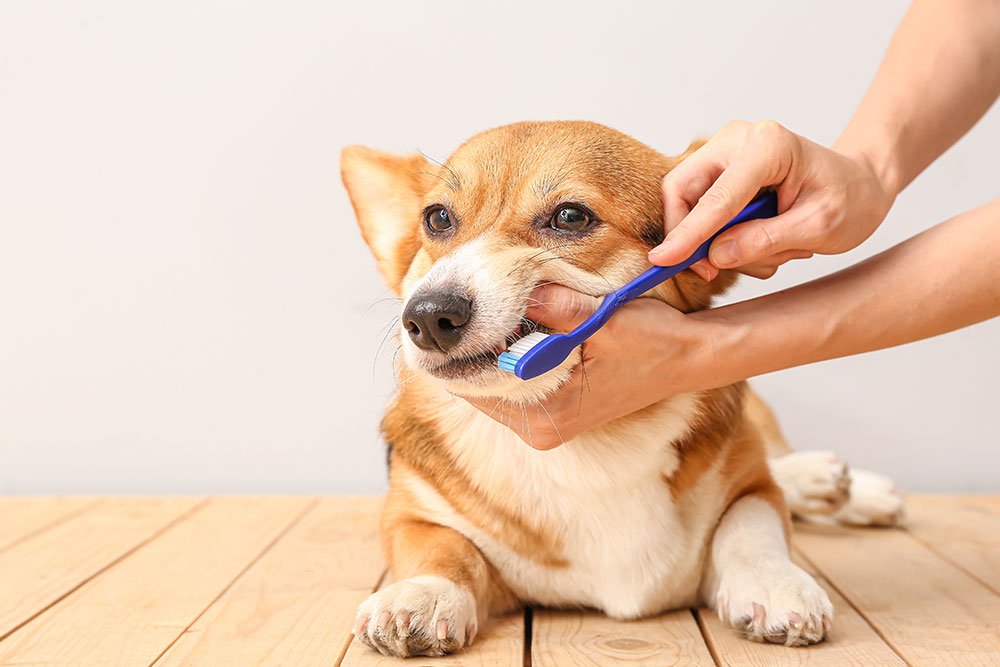
Here is the truth about dental home care: most people start with good intentions to brush, hit their first real resistance from their pet, and quietly give up. The toothbrush gets relegated to the back of the bathroom cabinet. The dental chews get used inconsistently. And by the time your pet’s next check-up comes around, their teeth tell the whole story.
The good news is that effective home dental care does not have to be perfect to make a difference. At The Vale Veterinary Group, our teams across Cullompton, Tiverton, Honiton, and Uffculme are happy to walk you through home care approaches that work for your pet’s individual temperament and your actual routine. Get in touch with us to schedule a dental assessment and leave with a realistic plan.
Key Takeaways
- Daily or near-daily brushing is the most effective home dental care because it physically removes plaque before it can harden into tartar, but wipes, enzymatic gels, water additives, dental diets, and chews all contribute meaningfully when brushing is not realistic.
- Home care prevents new tartar from forming but cannot remove tartar that has already mineralised; professional cleaning under anaesthesia is what addresses what home care cannot reach.
- VOHC-accepted products carry an independent seal indicating measurable plaque or tartar reduction in controlled studies, making it one of the most reliable shortcuts for choosing products that actually work.
- Starting dental care in puppies and kittens between eight and twelve weeks of age, even with just gentle lip lifts and finger contact, builds the foundation for a lifetime of easier maintenance.
Why Does Dental Disease Develop So Quietly?
Periodontal disease begins with plaque, a soft bacterial film that forms on tooth surfaces within hours of eating. Left undisturbed, plaque mineralises into tartar within a few days. Tartar irritates the gum tissue, triggering inflammation that progresses from gingivitis to deeper infection involving bone loss, painful tooth root exposure, and eventually tooth loss.
What makes this worth preventing is not just the mouth itself. Bacteria from advanced periodontal disease can enter the bloodstream and have been associated with changes in kidney, liver, and cardiac function over time. Daily disruption of the plaque cycle, even imperfect disruption, slows this process significantly.
Home care is not a replacement for professional dental cleanings under anaesthesia. It is what extends the benefit of each professional cleaning between visits. Our routine healthcare services include dental monitoring at every exam so problems are caught early.
How Do I Brush My Pet’s Teeth?
Why Is Mechanical Cleaning More Effective Than Other Methods?
Brushing is the most effective home dental care method because it physically removes plaque before it can harden. Nothing else matches it when done consistently. Daily is ideal; even three times a week still delivers real benefit. Consistency matters more than perfection.
How Do You Start Brushing Without Creating a Lifelong Battle?
The introduction matters enormously. Pets that associate a toothbrush with stress will resist forever, while those introduced gradually with rewards and patience accept brushing as a normal part of their routine. Cooperative care techniques using consent and positive reinforcement from the start make all the difference between a successful long-term habit and a battle.
A sensible introduction:
- Spend a few days touching your pet’s muzzle and gently lifting their lip, rewarding calmly each time
- Run a finger along the outer tooth surfaces so the sensation becomes familiar
- Introduce toothpaste on your fingertip and let your pet taste it before any brushing begins
- Move to a finger brush or soft toothbrush, starting only at the front teeth
- Extend gradually further back over days or weeks, never pushing past your pet’s tolerance
Starter kits like CET oral hygiene kits include pet-safe enzymatic toothpaste, finger brushes, and angled toothbrushes shaped for a dog or cat’s mouth, which makes assembling the right supplies easier than buying everything separately.
Brushing a dog’s teeth effectively means holding the brush at a 45-degree angle to the gumline and using short circular or back-and-forth strokes, paying special attention to the upper back teeth where tartar accumulates fastest. Brushing a cat’s teeth works best with lighter pressure, smaller brushes, and very short sessions repeated through the day rather than one extended attempt. Cats are generally more tolerant when they feel stable rather than restrained.
Never use human toothpaste. Fluoride and xylitol are toxic to pets. Use only enzymatic or pet-formulated products. Our veterinary nurses can demonstrate brushing technique at your next appointment.
How Do I Choose Products That Actually Work?
Pet dental product marketing is crowded with claims, which makes evidence-based selection important. VOHC-accepted products carry a seal from the Veterinary Oral Health Council, an independent body that reviews controlled clinical trial data before granting recognition. Products must demonstrate measurable plaque or tartar reduction to earn the seal, which makes it one of the most reliable shortcuts for choosing products that actually work.
When evaluating chews, water additives, diets, gels, and wipes, the presence of the VOHC seal gives reliable confidence that what is claimed is supported by evidence. Our team is happy to help you sort through the options at your next visit.
What Are the Alternatives When My Pet Will Not Tolerate Brushing?
Several effective alternatives exist when a toothbrush simply will not work for your pet. Dental wipes, enzymatic gels, water additives, and combination approaches all provide meaningful benefit. None of them match brushing alone for plaque removal, but used consistently, they can come close enough to make a real difference between professional cleanings.
Dental Wipes
Dental wipes or a finger wrapped in gauze provide friction-based plaque removal without a brush. They clean accessible outer surfaces reasonably well and are significantly better than doing nothing. They do not reach gumlines or back molars as effectively as brushing, but used consistently with an enzymatic product, they provide meaningful benefit. For some pets, wipes are the realistic long-term solution.
Enzymatic Gels, Sprays, and Powders
Enzymatic products work chemically by targeting the bacterial biofilm without requiring physical scrubbing. Products containing lactoperoxidase or glucose oxidase enzyme systems can be applied with a finger, sprayed, or even licked from your hand. Many require no rinsing and are well accepted by pets who resist anything more hands-on. Options like Vetradent oral care cover the gel and spray category, and ProDen PlaqueOff Powder sprinkles directly onto food, making it one of the easier formats to fit into a daily routine.
Combining an enzymatic product with wipes or brushing produces better results than either approach alone. Our pharmacy stocks dental wipes, enzymatic toothpastes, dental care powder, dental rinses, and water additives across our centres, and our team can advise on which combination suits your pet.
Water Additives
Water additives deliver antimicrobial ingredients passively through drinking. They are the least demanding option and a useful supplement for pets who resist any direct oral contact. Common options include TropiClean Fresh Breath, Bluestem water additive, and HealthyMouth products, each with slightly different formulations.
A few practical points:
- Effectiveness varies by product and is generally lower than brushing or enzymatic application
- Cannot remove tartar that has already formed
- Introduce gradually at low concentration to confirm your pet keeps drinking normally
- Provide a plain water bowl alongside any additive water during the introduction phase
Do Dental Diets and Chews Help With Plaque?
Dental diets are formulated with a larger kibble structure that requires teeth to penetrate before the food crumbles, producing mild abrasive cleaning with every bite. Some formulations also include ingredients that bind calcium to slow tartar mineralisation. Like all home care tools, dental diets extend cleaning intervals rather than eliminating the need for professional work.
Established options include Hill’s Prescription Diet t/d and Science Diet Oral Care for dogs, Royal Canin Dental formulas, and Purina DH Feline for cats. Whether transitioning to a full dental diet makes sense for your pet depends on their other dietary needs, age, and existing oral health status, which is part of the conversation at wellness exams.
Chewing also physically scrapes plaque from tooth surfaces. The critical safety rule: if you cannot leave an indentation by pressing your thumbnail into the chew, it is too hard and risks cracking teeth. Items to avoid entirely include antlers, hooves, hard nylon products, and raw bones. Safe chew toys flex or compress under pressure. Dental chew toys with textured surfaces that reach between teeth contribute genuine plaque removal when used regularly.
VOHC-accepted dental chews for dogs include Greenies, OraVet Dental Hygiene Chews, Purina DentaLife, Virbac VeggieDent, Whimzees, and Pedigree Dentastix. For cats, options include Feline Greenies, Purina DentaLife Cat Treats, and Whiskas Dentabites. Cats are generally less enthusiastic chewers than dogs, but treat-style dental products designed for the smaller mouth and bite pattern of a cat can still provide benefit.
When choosing chews, a few practical guidelines:
- Match chew size to your pet, with a snug fit that cannot be swallowed whole
- Supervise initial sessions with any new product
- Watch for GI upset in pets with sensitive digestion
- Replace chews that have become small enough to swallow
What Can Professional Cleanings Do That Home Care Cannot?
Tartar that has hardened onto teeth cannot be removed at home, regardless of how well the daily routine is maintained. Subgingival disease, the infection and bone loss occurring below the gumline, is not visible or accessible without anaesthesia. Professional cleaning is what addresses what home care cannot reach, and dental radiography under anaesthesia reveals problems at the root level that simply are not visible from above the gumline.
Anaesthesia-free dental scaling addresses only visible surfaces and cannot access subgingival disease or allow the diagnostic imaging that reveals root and bone pathology. It creates the appearance of cleaner teeth while leaving the most clinically significant disease untouched. Proper anaesthesia with full monitoring allows the team to do the work that actually matters, and our pre-anaesthetic protocols are designed with safety and your pet’s individual health in mind.
Good home care earns longer intervals between professional cleanings. It does not make them optional.
What Signs Mean My Pet Needs Professional Dental Care?
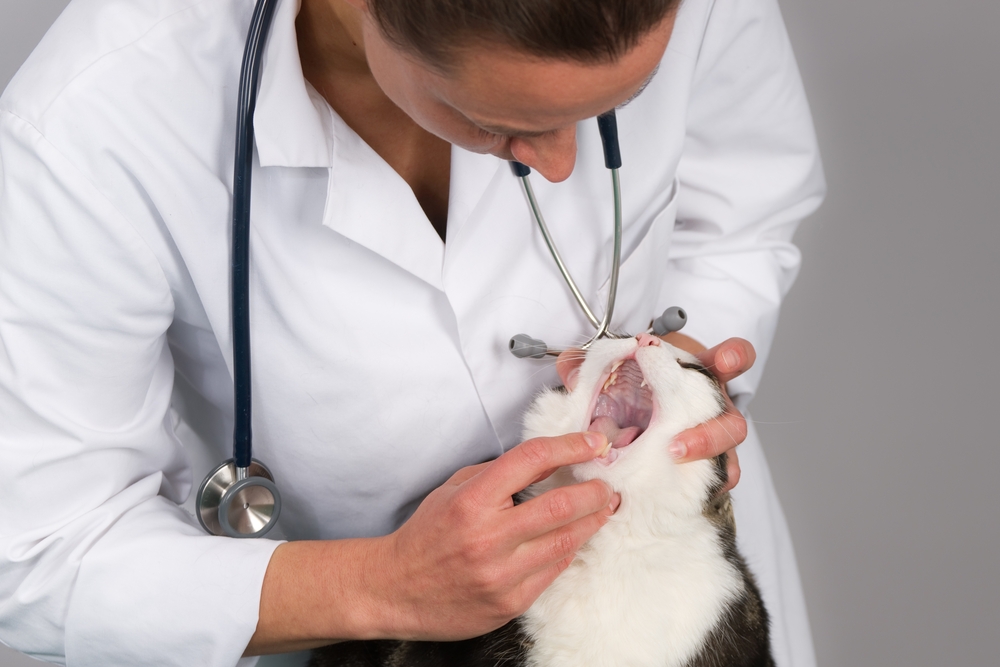
Home care goes hand in hand with knowing when to escalate. Some changes are worth flagging at your next routine appointment; others warrant a call sooner. Bad breath, visible tartar, gum changes, oral discomfort, and behavioural shifts around eating can all signal that professional attention is needed. Cats are especially good at hiding dental pain, so even subtle change deserves a closer look.
Contact our team if you notice any of the following:
- Yellow or brown deposits on the teeth, particularly around the gumline
- Bad breath that is noticeably worse than usual or has a sweet, metallic, or particularly foul quality
- Reluctance to eat, dropping food, or favouring one side of the mouth
- Red, swollen, or bleeding gums at any point
- Visible tooth damage, including chips, cracks, or discolouration
- Pawing at the mouth, face rubbing, or head shaking that suggests oral discomfort
Cats are especially good at hiding dental pain. A cat that is still eating may be managing discomfort that has built up over months. Subtle changes worth flagging include changes in grooming habits, reduced appetite for dry food specifically, or a gradual shift toward softer food choices.
Feline tooth resorption is one of the most common and most painful dental conditions in cats, affecting a significant percentage of adult cats at some point in their lives. The lesions are not visible without proper examination and dental radiography under anaesthesia, which is one of the key reasons professional dental assessments matter even when your cat’s teeth look superficially clean. Our nursing teams can advise on what to look for between visits and when to prioritise a check.
How Do I Build a Dental Routine That Actually Sticks?
The most effective dental routine is the one that fits real life. Pairing dental care with an existing daily habit, such as the last thing before bed, dramatically improves consistency. Keep supplies visible. Involve everyone in the household so the routine holds even when schedules change.
A few practical strategies:
- If your pet resists a toothbrush, back up to a finger brush or wipes and rebuild slowly
- If time is genuinely short, thirty seconds of enzymatic gel applied daily is worth doing
- Monitor breath quality and gum colour informally between visits
- On days you cannot brush, use a dental chew or powder instead
Any consistent effort produces benefit, even when the routine is imperfect.
Frequently Asked Questions About Dental Home Care
How often should I brush my pet’s teeth?
Daily is the goal. Every other day still provides meaningful protection. Anything is better than nothing.
My pet absolutely will not tolerate a brush. What else can I do?
Wipes, enzymatic gels, water additives, and dental chews all provide real benefit when brushing is not possible. A combination of these tools can come close to brushing effectiveness for some pets.
Are dental chews enough on their own?
They help significantly but work best as part of a broader routine that includes enzymatic products or brushing. Chews alone are not sufficient to prevent periodontal disease in most pets.
How do I know if home care is working?
Fresher breath, pinker gums, and slower visible tartar build-up between professional cleanings are all positive signs. Our team monitors this at each visit.
At what age should I start dental care for my pet?
As early as possible. Puppies and kittens who learn to accept tooth brushing as a normal part of their routine are far easier to maintain as adults. Starting at eight to twelve weeks, even with just gentle lip lifts and finger contact, builds the foundation for a lifetime of easier dental care.
My dog has had several teeth extracted. Does he still need home dental care?
Yes, and probably more so. Tooth loss changes the distribution of chewing forces on remaining teeth and can accelerate disease at adjacent sites. The remaining teeth still accumulate plaque and tartar, and home care protects what is left. Our team can show you how to adapt your approach around any gaps.
My pet had a professional cleaning recently. Do I still need to do home care?
Yes, and the period immediately after a cleaning is actually the best time to establish a routine, since you are starting with a cleaner baseline.
Setting Up Long-Term Dental Health for Your Pet
The Vale Veterinary Group is here to help your pet’s dental health over the long term, not just at their annual examination. Our small animal services include comprehensive dental care, and our nursing teams across Devon are always happy to guide you through product choices and technique. If your pet is due for a dental check or you have concerns about their oral health, get in touch with your nearest centre.






Leave A Comment