
A surprising number of everyday toys, chews, and collars can cause real harm: dense chews that crack teeth, toys that break into pieces a dog can swallow, retractable leads that injure on a sudden lunge, and collars that press on the windpipe. They rarely look dangerous in the shop, and often come with promises of hours of fun or fixing a behaviour problem. They are the ordinary bits of kit most of us buy without a second thought, which is exactly why knowing the genuine offenders is worth a few minutes.
The Vale Veterinary Group cares for dogs and their families across Devon, and a quick word about kit during routine healthcare visits often saves a great deal of bother and veterinary costs later on. If you are unsure whether something in your dog’s toy basket or clipped to their collar is a good idea, speak to our team and we will happily talk it through.
Worth Knowing
- The kit behind most dog injuries is ordinary: hard chews, breakable toys, retractable leads, and collars that tighten.
- A chew hard enough to crack a tooth usually means an extraction, so the thumbnail test is worth doing before you buy.
- A swallowed piece of toy can cause a blockage within hours, which makes the cheapest toy a false economy.
- Reward-based training and a well-fitted harness achieve everything a prong, choke, or electric collar promises, without the risk.
Which Bits of Kit Actually Cause Injuries?
The kit that brings dogs in to see us tends to fall into three groups: chews hard enough to fracture teeth, toys that break into pieces a dog swallows, and collars or leads that injure the neck. Each is common, each is largely preventable, and each is far easier to put right when it is caught early.
What makes these injuries frustrating is how harmless the products look on the shelf. The table below is the quick version.
| The bit of kit | What can go wrong | A safer choice |
| Hard “long-lasting” chews (bones, antlers, hooves, nylon) | Fractured tooth needing extraction | A chew that passes the thumbnail test |
| Toys that break into pieces | Swallowed fragments, gut blockage | A correctly sized, durable toy |
| Retractable or tightening collars | Bruised windpipe, neck strain | A fixed lead and a fitted harness |
| Prong, electric, or choker collars | Increased behavioural issues | Positive reinforcement training |
None of this means wrapping your dog in cotton wool. It means choosing the version that does the job without the trip to the vets, which is the sort of thing we are glad to help with.
What Lead and Collar Should You Use on a Walk?
The walking kit worth having keeps pressure off the throat and fits your dog’s build, and for most dogs that means a well-fitted harness with a fixed lead rather than the collar taking the strain. A harness spreads the force of a lunge across the chest, which matters on a muddy Devon lane when your dog spots a squirrel and forgets their manners.
A quick guide to what suits which dog:
- Front-clip harnesses: redirect a puller’s forward motion, a sensible first choice for dogs that lean into the lead.
- Head collars: give the most control over a strong puller, introduced patiently with treats.
- Back-clip harnesses: comfortable for dogs that already walk nicely.
- Martingale collars: stop narrow-headed dogs slipping free without choking when fitted correctly.
- Flat collars: ideal for ID tags and everyday wear, just not the attachment point for a determined puller.
Head collars and harnesses each suit a different dog, and choosing the right collar comes down to a careful fit. For the lead itself, a fixed one of roughly 1.2 to 2 metres gives the best balance of freedom and control for walking nicely.
Retractable leads are best left on the shelf:
- They reward pulling: the cord pays out exactly when your dog pulls.
- They give away control: your dog can be five metres away when something happens.
- The thin cord injures: retractable leads cause cuts and friction burns to dogs and people, and serious retractable-lead injuries include deep lacerations and even finger amputations.
- The handle can be torn away or cord can break: a hard lunge can pull it from your hand or snap a thin cord.
When you want to give your dog more freedom on the moor or along a coast path, a long line of five to ten metres is the safer way to do it.
Are Prong, Choke, and Electric Collars Ever a Good Idea?
These aids work by applying pain or pressure, and they tend to suppress a behaviour in the moment without ever teaching the dog what to do instead. They also carry real physical risk, which is why UK welfare bodies advise strongly against them.
The pressure collars bring specific risks:
- Damage to the windpipe from a sudden tightening lunge.
- Neck and spine injury, particularly in dogs with disc disease.
- Skin puncture from the prongs.
Prong collars are especially risky for dogs with airway or disc problems, and training-collar injuries can be severe.
Aversive training methods also tend to increase fear and aggression, because a dog often links the pain to whatever they were looking at rather than to their own behaviour. Many behaviour issues that training collars are used for, like reactivity to other dogs or barking at people passing by, are fear-based rather than your dog “being naughty”. Adding a shock or pain when a dog is expressing their fear simply adds more negativity to what’s already a scary situation for them, making the behaviour worse over time.
The approach that lasts is kinder and more effective. Positive reinforcement training rewards the behaviour you want, so your dog offers it willingly. For a puller, that means rewarding a loose lead until it becomes second nature. For a dog that reacts to others, structured work like the engage-disengage game changes how the dog feels about a trigger rather than temporarily hiding the behaviour by punishing their response to something they are afraid of. It takes time and patience, but results in a pet whose behaviour problem is solved, not hidden.
Are Long-Lasting Chews Damaging Your Dog’s Teeth?
The chews sold as long-lasting are long-lasting because they are hard, and that hardness is exactly what cracks teeth. Dogs bite down with enormous force on their back teeth, and the large upper chewing tooth, the carnassial, is the one that breaks most often. A fracture that exposes the sensitive centre is painful, prone to infection, and almost always means the tooth has to come out.
The usual culprits, and why popular chews carry real risks:
- Cooked bones: go brittle and splinter, cutting the mouth or perforating the gut.
- Raw or real bones: a leading cause of that fractured carnassial tooth.
- Antlers and hooves: a common reason for cracked premolars, often picked up only at a dental check.
- Hard nylon chews: gnaw down into sharp points.
- Rawhide: swells into a dense mass that can lodge in the oesophagus or intestine.
The chews most likely to break teeth all fail one simple test: if you cannot dent it with a thumbnail, it is too hard for your dog’s teeth. If your dog has cracked a tooth or gone quiet on one side of their mouth, our team can examine it and treat it before it turns into an abscess.
What Toys Are Safe to Leave Your Dog With at Home?
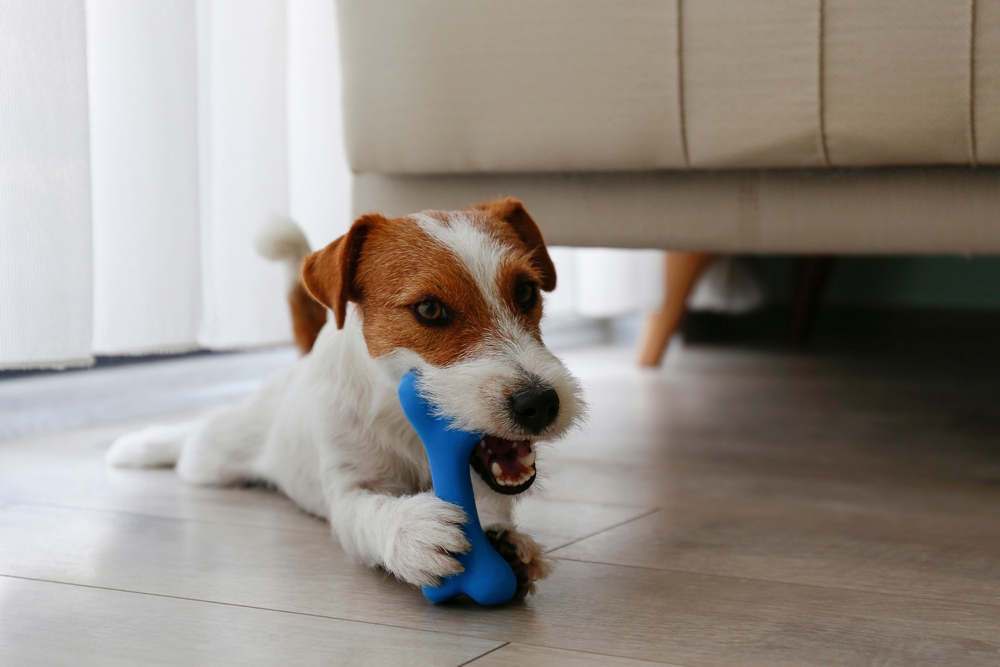
The safest toy to leave your dog with is one sized and built for their style of play, because an unsupervised dog and a flimsy toy is how swallowed pieces happen. Ingested fragments cause gut foreign bodies that range from a rough night to a life-threatening blockage.
The toys most likely to come to grief:
- Rope toys: swallowed fibres form linear foreign bodies that saw through the intestine.
- Squeaky toys: the squeaker becomes a choking hazard once it is exposed.
- Undersized toys: anything that fits in the mouth can be swallowed whole.
- Soft stuffed toys: the filling packs together and blocks the gut.
- Hard plastic toys: unforgiving on teeth, and they splinter into sharp bits.
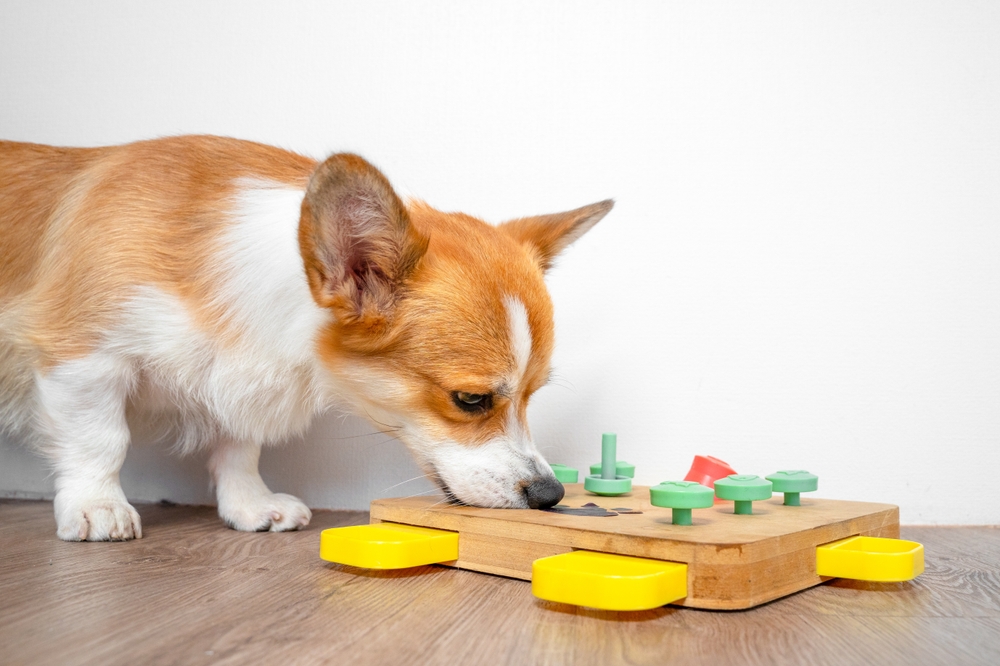
For a dog left alone, durable rubber toys stuffed with food are the best bet, because they occupy a dog happily rather than being shredded. A few habits help: buy for your dog’s size and chewing strength, supervise any new toy until you know how they treat it, and replace toys before they begin to fall apart.
How Can You Tell If a Piece of Kit Is Bothering Your Dog?
Dogs tell you how their kit feels long before they protest outright, usually through small changes in posture and expression. Learning to read those signals means you can swap an uncomfortable harness or collar before it causes a sore or a sour association with walks.
Watch for the quieter signs:
- Lip licking, yawning, or a tucked tail as the kit goes on.
- Scratching at the collar, or wriggling out of the harness.
- Coughing on the lead, or redness where the kit sits.
- Pulling away when you touch where the kit sits.
Learning to read canine body language tells you whether the problem is the kit or the dog underneath it.
When Is It More Than the Gear?
Sometimes the kit is fine and your dog is telling you something it cannot fix. A dog who suddenly resists a harness they wore happily last week, or who begins chewing destructively out of nowhere, may be dealing with discomfort, stress, or a medical change. Equipment alone will not settle a problem that began in the body or the mind.
Possible contributors include pain, dental disease, anxiety after a change at home, and the cognitive changes of older age. Our behaviour support and the vets across our Devon centres can help work out whether a sudden change is down to the gear, the body, or the behaviour, and what to do about it.
Frequently Asked Questions About Dog Kit and Toys
My dog pulls terribly on the lead. Is a prong or choke collar the answer?
For nearly every dog, the risk is not worth it, and there are kinder tools that work better. A front-clip harness or a head collar gives you real control over a strong puller without pressing on the throat, and reward-based training teaches the loose lead rather than punishing the pull. We are glad to show you how to fit and use them.
How do I know if a chew is too hard for my dog’s teeth?
Use the thumbnail test: press your thumbnail into the chew, and if it leaves no mark, it is hard enough to fracture a tooth. A good rule of thumb is that if you would not want it dropped on your knee, it is too hard for your dog’s mouth. Antlers, hooves, real bones, and hard nylon all fail.
My dog has swallowed part of a toy. What should I do?
Ring us straight away rather than waiting to see what happens. Small pieces sometimes pass, but others cause a blockage within hours, and the early window is when treatment is simplest. Watch for vomiting, a tender tummy, refusing food, or low energy, and treat any of those as a reason to be seen the same day.
Choosing Kit That Keeps Your Dog Safe
The safest kit is rarely the flashiest or the most expensive, and the few minutes it takes to check a chew or swap a retractable lead for a fixed one saves the painful, costly injuries we see far too often. The right choices depend on your dog’s size, chewing style, and habits, which is the sort of thing we are always happy to talk through.
If you would like a second opinion on a lead, harness, chew, or toy, or your dog is showing any sign of a kit-related injury, get in touch with our team or find your nearest of our centres across Devon. We would far rather help you choose well than treat the consequences.





Leave A Comment